Redesigning a logistics website that increased lead generation by 269%
About the Client.
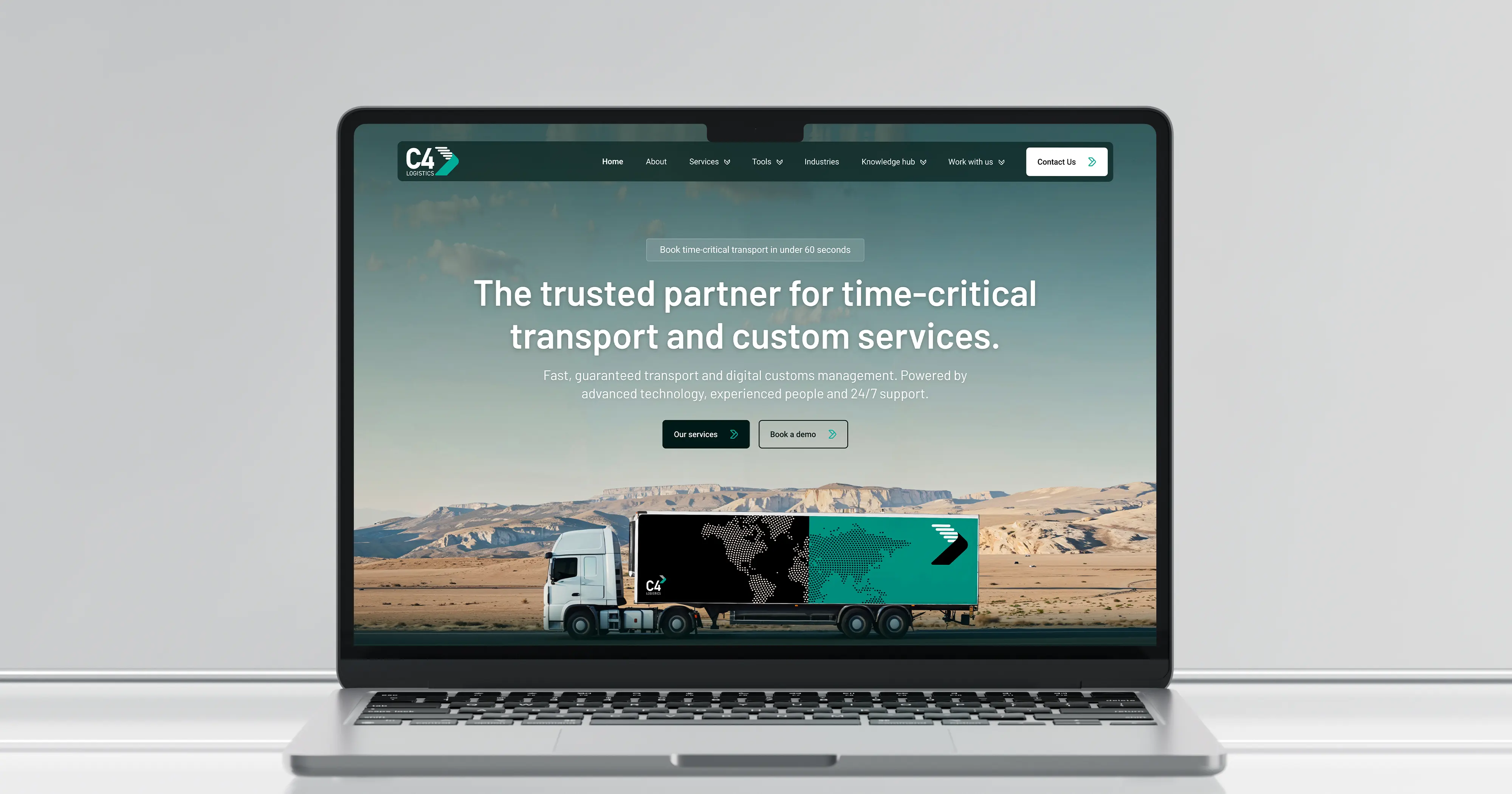
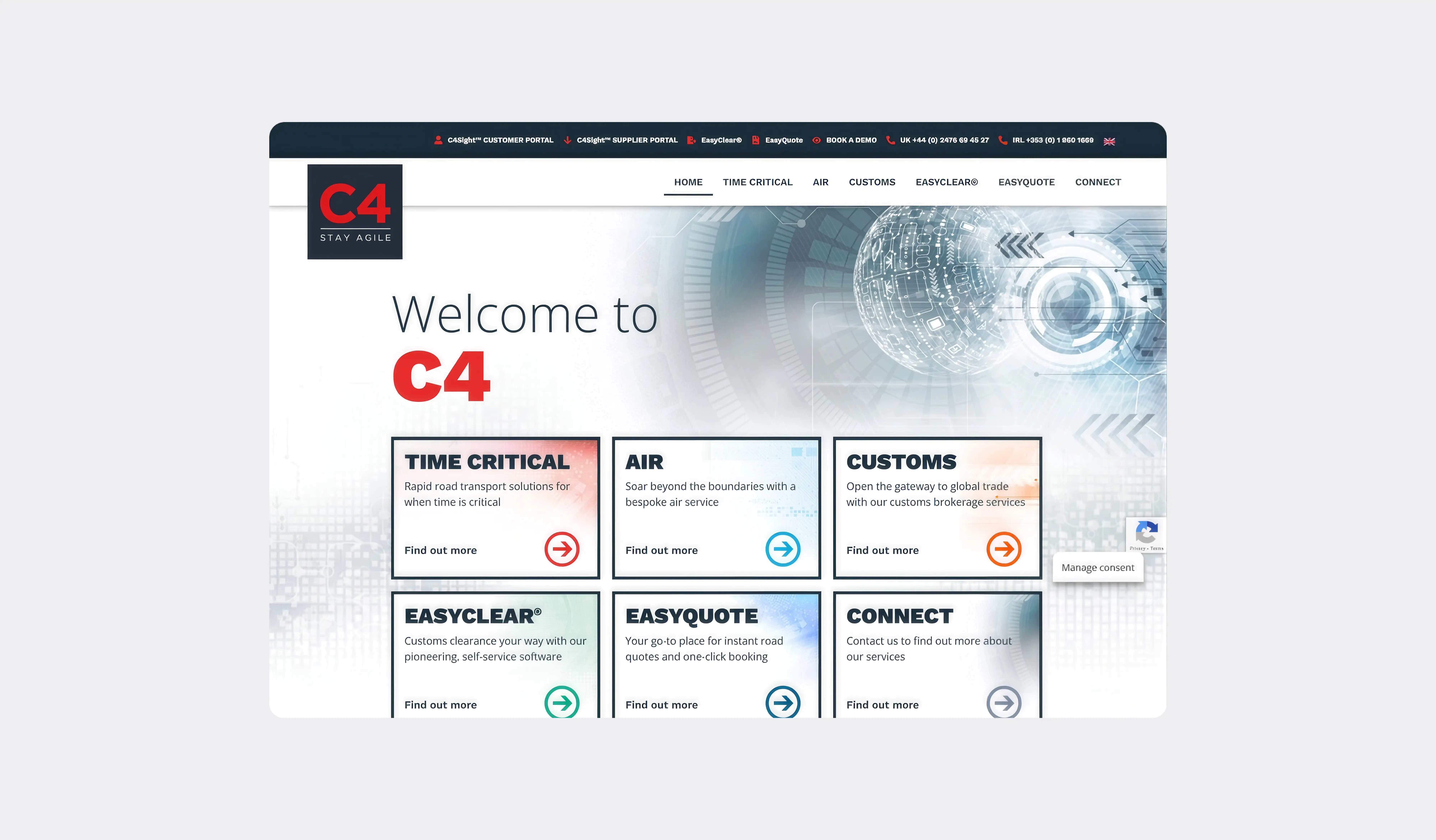
C4 Logistics delivers time-critical transport and customs brokerage across Europe through two service channels, Transport and Customs, supported by its own digital tools: EasyQuote, EasyClear, Drop & Book, and the C4Sight portal. The business is known in its market for speed and reliability. Its website was not communicating any of that. The structure was unclear, the routes into each service were fragmented, and the site was doing almost no selling.
60%
Of inbound enquiries now come through the website345%
Increase in engagement with demo scheduling269%
Increase in lead generation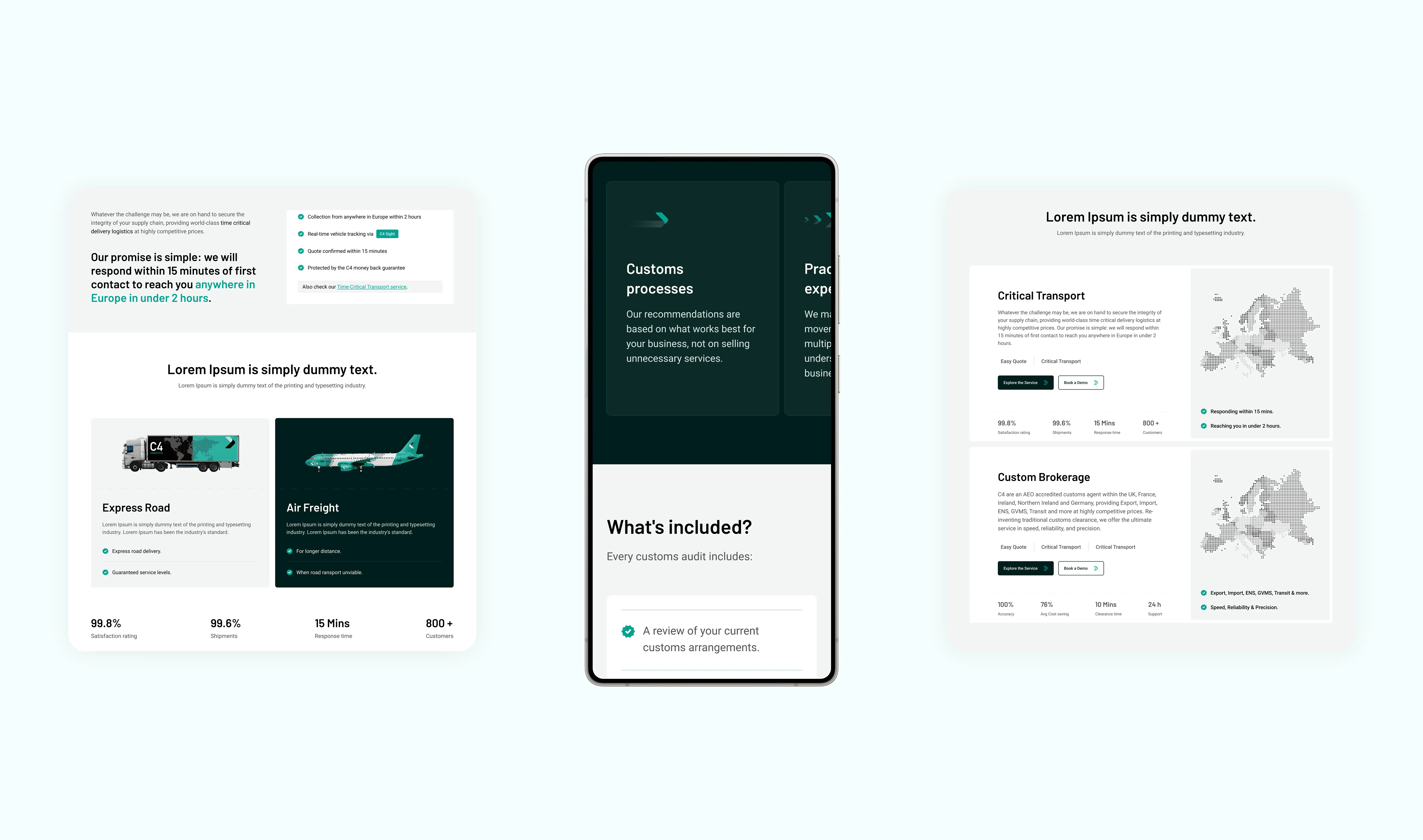
How we approached challenges
01
Two service channels presented as one business
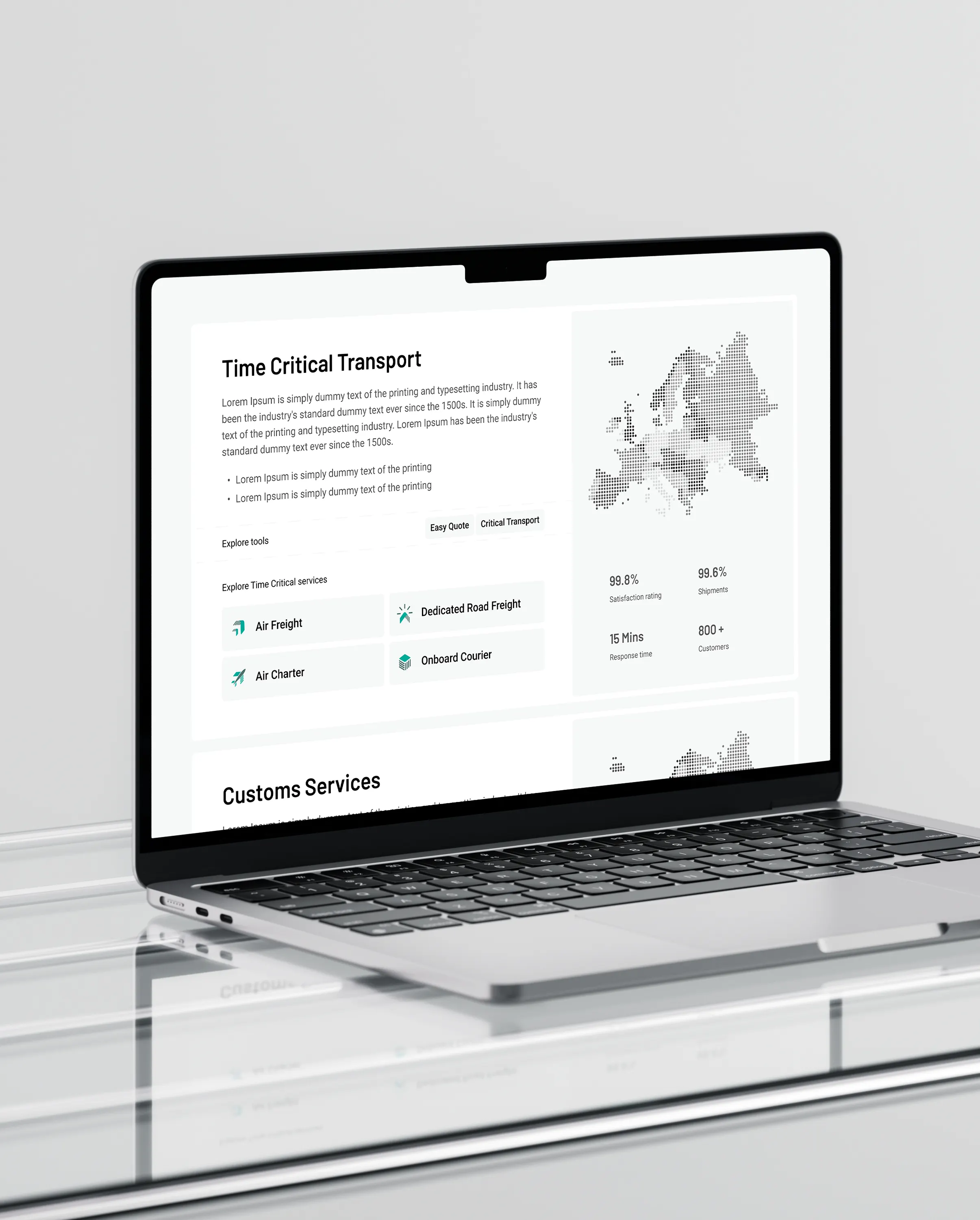
Transport and Customs serve overlapping but distinct buyers, and the old site blurred them together. We separated them structurally while keeping the connection visible, so a customs enquiry does not have to be filtered out of transport content, and cross-selling between the two becomes possible rather than accidental.
02
Digital tools with nowhere to live
EasyQuote, EasyClear, Drop & Book, and C4Sight are genuine differentiators that the old site gave no proper home. Each was grouped under the service it belongs to, so a prospect encounters the relevant tool at the point they are evaluating that service.
03
A brochure where a sales funnel was needed
The site described the business and then stopped. Strong, visible calls to action for quotes, demos, and portal access were placed throughout, which is what turned a passive site into the 60% of enquiries it now produces.
04
Content the client could not maintain
A site that cannot be updated ages from the day it launches. Advanced Custom Fields powers a CMS built around how the C4 team actually works, so content changes happen in house without touching layout or performance.
Our process that built a scalable solution
Research, personas, and a new information architecture
We began with a discovery call to understand the existing site's limitations and validate the business goals, then ran competitor analysis and UX research across both logistics and customs platforms. From that we defined personas and mapped journeys for logistics professionals, procurement leads, and existing customers, some using one channel and some both. The new information architecture, sitemap, and content structure were built on that evidence rather than on a page count.
A bespoke design system, then every page prototyped
Once refreshed brand guidelines were in place, our designer built a design system for consistent use across the site, followed by wireframes for every page type, low-fidelity layouts for desktop and mobile, custom vectors and icons, and a fully interactive Figma prototype covering all pages. Nothing went into development unseen.
Build, QA, and launch protection
The site was built as a bespoke WordPress theme, then taken through structured QA by the UI, UX, and QA teams. Discovery to launch took three months. Before launch we implemented on-page SEO, image and speed optimisation, a redirect strategy to protect the existing search equity, security hardening, and GA4 with custom event tracking. The redirect strategy is the reason a redesign of this scale did not cost the site its rankings.
Tech stack


What we did
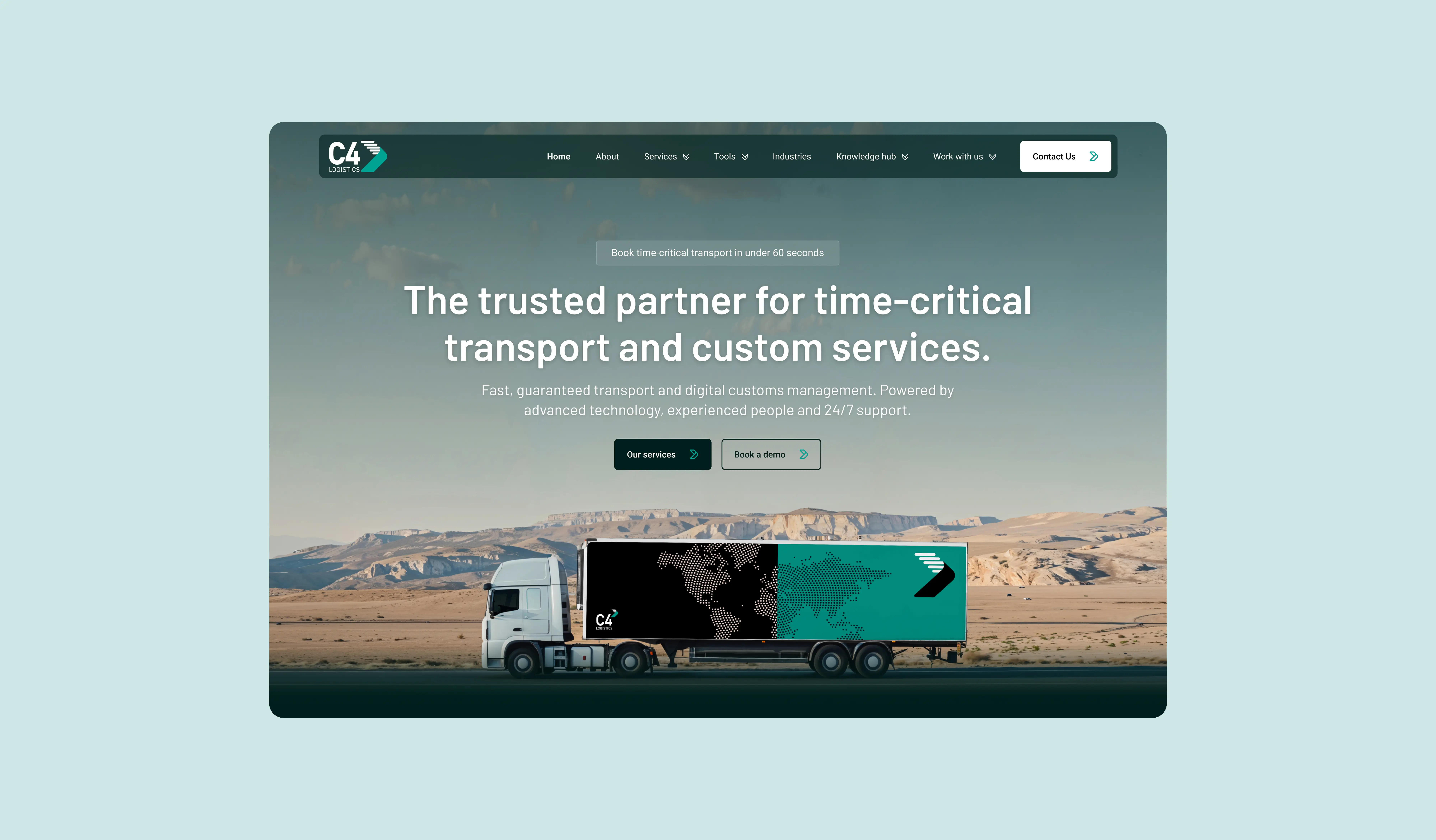
The build is a bespoke WordPress theme with a content model designed around how the C4 team works, so the site is theirs to run. Behind it sits the work that does not show: heading hierarchy, canonical tags, breadcrumbs, image and speed optimisation, a redirect strategy that carried the existing search equity across, security hardening, and GA4 event tracking that makes the site's performance measurable rather than assumed.
Result and impact
The effects reach past the numbers. Because Transport and Customs are now clearly separated, sales conversations start further along, with the prospect already understanding which service they need and which tool supports it. The client's team runs the content themselves. And the redirect strategy meant the search equity built up over years transferred to the new site rather than being rebuilt from zero, which is the quiet difference between a redesign that grows traffic and one that costs six months recovering it.
Frequently asked questions
Can a website redesign actually generate leads?
It can if it is built for that rather than for appearance. In the first three months after launch, C4's site produced over 60% of inbound enquiries, with lead generation up 269% and demo scheduling engagement up 345%, all measured in GA4. What produced those numbers was structure and clear calls to action, not visual polish.
Can our team update the site afterwards?
Yes, and it should be a requirement rather than a bonus. C4's CMS was built with Advanced Custom Fields around how their team works, so content changes happen in house without affecting layout or performance.
How do you measure whether a redesign worked?
Agree the measures first and instrument for them. We implemented GA4 with custom event tracking before launch specifically so enquiries, demo requests, and portal access could be measured rather than guessed at afterwards.
How long does a redesign like this take?
C4's site took three months from discovery to launch, covering research, personas and journey mapping, a bespoke design system, a fully prototyped set of pages, the build, QA, and launch preparation. The variables are the number of page templates and how much content has to be migrated.
Will we lose our search rankings in a redesign?
Not with a redirect strategy in place before launch. C4's existing search equity transferred to the new site, which is why the results arrived within months rather than after a recovery period. A redesign without one is the most common way a company loses traffic it spent years earning.
Do you build on WordPress or something bespoke?
Both, depending on the site. C4 needed content its own team could manage daily, so a bespoke WordPress theme was the right answer. Where a site needs more control or performance than a CMS allows, we recommend a headless build instead, and we explain the trade-off before you choose.
How do you handle a business with several distinct services?
By researching each audience separately. C4 sells transport and customs to overlapping but different buyers, so we mapped journeys for logistics professionals, procurement leads, and existing customers, then built a structure that separates the services while supporting cross-selling between them.
How much does a website redesign cost?
Cost follows the number of page templates, how much content needs migrating, and whether research and a design system are in scope. Every project is quoted with fixed scope and price in writing before work starts.
Got a website that should be selling for you?

Tharsh Thangavadivel
Founder, Exline LabsTell us what your site is not doing. We will review it and give you an honest view of whether a redesign would pay for itself, and what it would cost.
C4 Logistics platform revamp
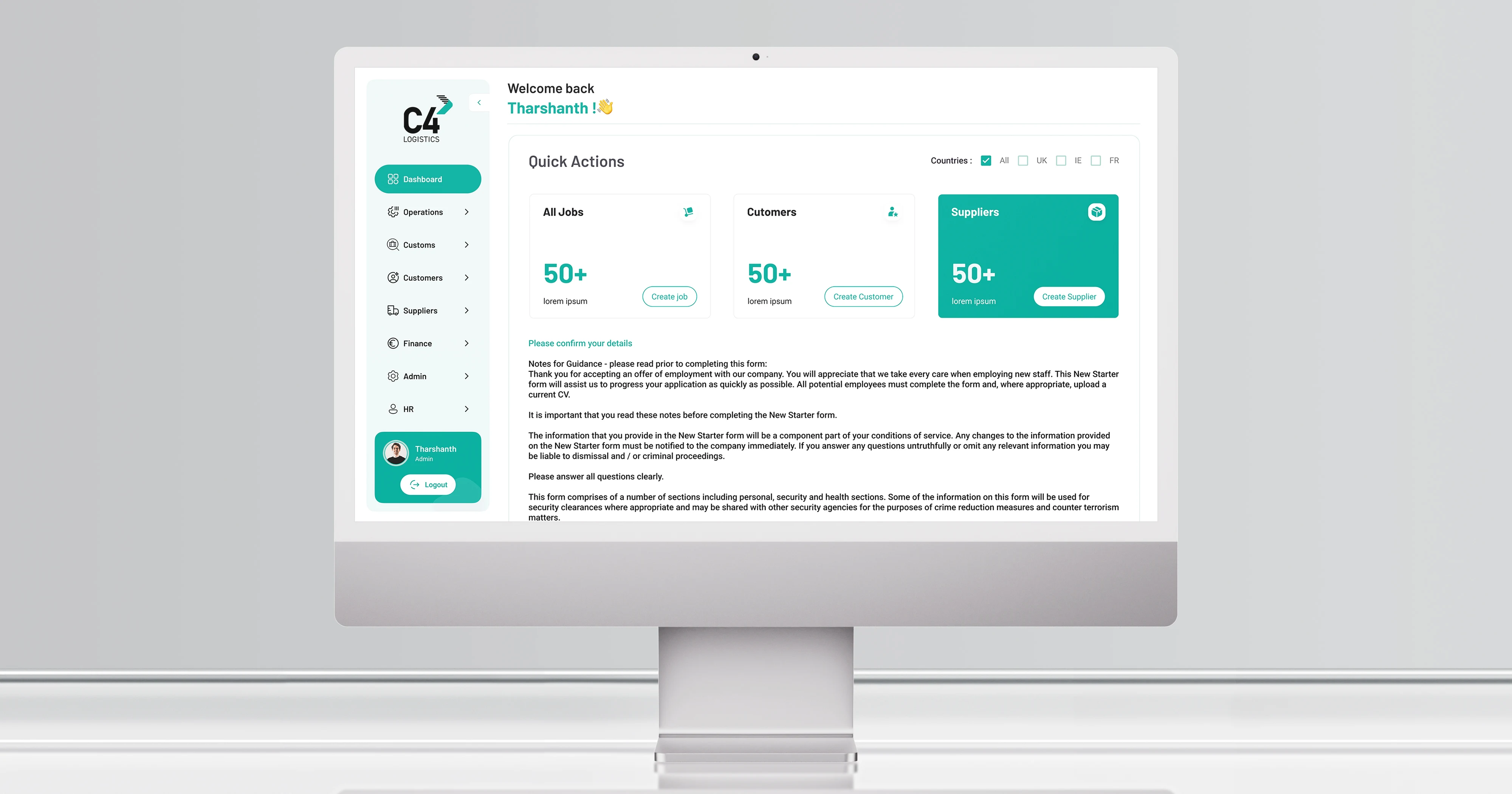
We also redesigned the C4 Logistics operational platform across three portals and 326 screens. See that case study.
Read the case study →