Our agile software development process, from first conversation to final launch.
A lot of founders have been through a software development process that felt like a black box: little visibility, slow answers, and a final product that wasn't quite what they'd discussed. Ours works the other way round. You can see every stage, every decision is explained, and you approve each deliverable before the next phase starts.
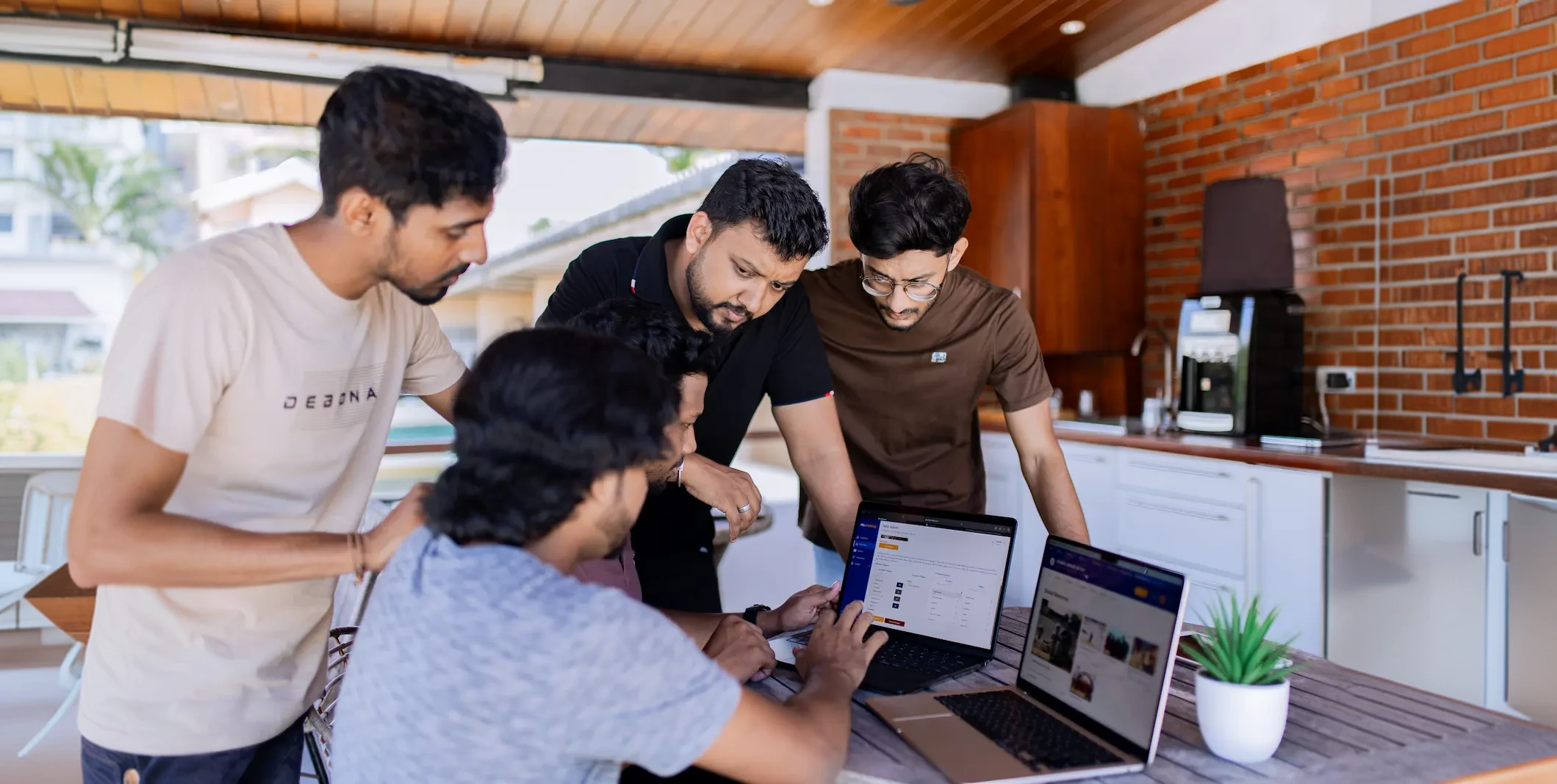
Our agile software development process, phase by phase.
Discovery sprint
A few days for a focused MVP, up to two weeks for a larger product.
We map the problem before any design or code. That means requirements, user research, a look at your competitors, the structure of the product and a clear scope. If an assumption in the brief looks weak, we raise it now. You're closely involved, with working sessions and early findings shared as we go.
- Product brief and functional spec
- User research findings
- Information architecture map
- Prioritised feature set
- Sprint plan and timeline
- Fixed-scope proposal with milestone pricing
Design sprints
From a few days to a few weeks, depending on the product.
UX design happens in Figma, and you have access to the workspace from day one. The order is always the same: user journeys first, then wireframes, then visual design. You approve each step before we move on, which is how structural problems get caught while they're cheap to fix.
- User flow diagrams
- Wireframes
- Interactive prototype
- Finished UI design
- Component library and design system
- Client-approved designs, ready to build
Development sprints
Short sprints. An MVP usually takes 1 to 6 weeks in total, and a web application 6 to 8.
Full-stack engineering, with the scope for each sprint agreed at its kickoff. At the end of every sprint, working software goes onto a staging site that you can open and test, and we demo it with you. The same developer writes the first and last lines of code, so nothing gets lost in a mid-project handover.
- Working software on staging at the end of every sprint
- Sprint review notes
- An up-to-date Jira board
- Your approval before the next sprint starts
QA sprint
Before anything goes to production.
We test against the user journeys we mapped in discovery: functional and regression testing, different devices and browsers, and accessibility checks. Bugs get fixed before launch, not after. Nothing goes to production without passing QA.
- QA test report
- Resolved bug log
- Production deployment, hosted on UK servers if we host it for you
- Source code, credentials and documentation handed to you
After launch, many clients move to a dedicated developer or an extended team on a monthly retainer, so the same people stay on the product.
Choose the model that fits your situation.
Before the process begins, the right commercial model needs to be in place.
Exline Labs works across three engagement structures depending on what the client needs.
Fixed scope
Best for: A defined problem or product idea with a set budget. If your idea is still loose, we'll help shape it into a scoped project with a fixed cost and timeline.
Resource plan
A UX designer, one or more developers and a QA engineer, depending on how complex the product is. Tharsh is involved from kickoff to delivery.
Length of engagement
A fixed timeline in sprint milestones. MVPs typically take 1 to 6 weeks, web applications 6 to 8 weeks and UX engineering engagements 8 to 10 weeks.
Management
Our project lead runs sprint planning and keeps you updated at every kickoff and review. You don't have to manage anyone day to day.
Billing
A fixed price in three milestones: a deposit at the start, a payment at design sign-off and a final payment on delivery.
Dedicated developer
Best for: A live product with an active roadmap that needs a reliable developer or designer, without the cost and risk of a permanent hire.
Resource plan
One developer or designer, matched to your role, stack and seniority, and chosen for your product.
Length of engagement
It starts with a one-month trial. Tell us at least a week before the trial ends whether you'd like to continue. After that it runs month to month, and either side can end it with one month's notice.
Control
They work under your direction, join your standups and report to you, 8am to 5pm UK time. We handle sourcing, HR and continuity.
Billing
One monthly invoice at the agreed rate, with no hidden fees and no recruitment charge.
Extended team
Best for: Products that need more capacity, several workstreams running at once, or more than one skill gap filled.
Resource plan
Several team members covering front end, back end, UX, QA and DevOps, in whatever mix you need.
Length of engagement
The same as a dedicated developer: a one-month trial, then month to month, with one month's notice on either side.
Control
You set the priorities and the roadmap. We manage the team internally, and you work with them as you would your own staff.
Billing
One consolidated monthly invoice covering everyone on the team.
You'll always know where your project stands.
Clients are inside the project from day one, not waiting outside it. Communication happens on the channel that works best for you, not us. Here is what your visibility looks like throughout the project.
Jira
From day one. A full task board showing the status, priority and owner of every ticket.
Milanote
Discovery and design. Research, journey maps and findings, organised so non-technical people can follow them.
Figma
From the design sprints. A live workspace where you can review, comment on and approve designs, with nothing exported or lost.
Slack
Throughout. Direct access to your designer and developer, with an update at the end of every day.
Email and WhatsApp
Whichever channel you prefer, during UK working hours, 8am to 5pm.
You see working software at the end of every sprint, and if anything changes, you hear about it from us before you'd notice it yourself.
From your first message to project kickoff.
01
Scope submission
Share your brief, detailed or rough. You don't need a perfect brief to start.
02
Review and clarification
We review it, flag anything unclear or risky, and may suggest a short call to fill the gaps.
03
Scope approval
Once we agree on the scope, it's written up and becomes the basis for the proposal and the contract.
04
Proposal
You get a full proposal, covering scope, sprint plan, timeline and milestone pricing, within five working days of the scope being agreed.
05
NDA and contract
We sign an NDA whenever you need one. The contract covers IP, payments, sign-off and termination before any work starts.
06
Kickoff
Once the contract is signed and the first milestone is paid, the discovery sprint begins.
Why this process produces better products.
UX-first engineering reduces rework.
Fixing a problem in a wireframe takes minutes. Fixing it in code can take days. That's why we make design decisions before engineering starts, and why our builds rarely need expensive rework later.
Fixed deliverables prevent scope creep.
Every phase ends with deliverables you approve. Scope, priorities and budget stay visible the whole way through, so there are no surprises in the final invoice.
Full visibility prevents failure.
Most software projects that fail don't fail because of the technology. They fail because nobody knew what was happening. With a live board, daily updates and a demo every sprint, you can check where your project stands in about thirty seconds.
Ready to see this process applied to your project?

Tharsh Thangavadivel
Founder, Exline LabsWe research every project before the discovery call, so you get findings, not just questions.
Still have questions?
How long does a typical project take from first conversation to launch?
It depends on the work. An MVP takes 1 to 6 weeks, and most of our recent ones went live in about a week. A web application takes 6 to 8 weeks, and a UX engineering engagement 8 to 10 weeks. Your proposal confirms the timeline as milestones before any work starts.
How do I know what the team is working on day to day?
You get access to the Jira board from day one and can see every ticket. You also get a daily update in your own channel, and you join the sprint kickoffs and reviews where working software is demonstrated.
Do you sign NDAs and what IP rights do I own?
We sign NDAs before any sensitive discussion. All IP, including code, designs, assets and documentation, transfers to you on completion, and we keep no rights to it.
Do you work with clients outside the UK?
Yes. Most of our clients are in the UK, and we also work with clients in Germany, France, Ireland and New Zealand. Discovery calls are by video, and we're online 8am to 5pm UK time, with some flexibility for other time zones.
What happens after the product launches?
Many clients move to a dedicated developer or extended team on a monthly retainer. The same people stay on the product, so nobody needs re-briefing. We can also host the product for you on UK servers, with backups and monitoring.
What if my requirements change during the build?
Changes are handled at sprint boundaries. We discuss them at the next kickoff, show you the effect on the timeline and budget, and nothing changes without your approval.
Where is my data hosted?
If we host your product, it runs on UK servers, with backups and monitoring, and we handle personal data under UK GDPR. If you'd rather run it on your own AWS, Azure or other cloud account, we'll set it up and deploy it there.