Rebuilding a tennis club platform as a cloud MVP that secured its first investment round
About the Client.
40Love set out to modernise how tennis clubs, tournament organisers, coaches, and players run their daily operations, replacing manual and fragmented processes with a single platform covering club management, tournaments, coaching, and payments. The business was already running on a locally installed FileMaker Pro system, which worked but could not scale, could not be reached from anywhere, and could not carry the product vision the founder had in mind.
02
Months from kick-off to launch15+
Clubs joined the platform since launchFunded
Initial investment round secured after MVP launch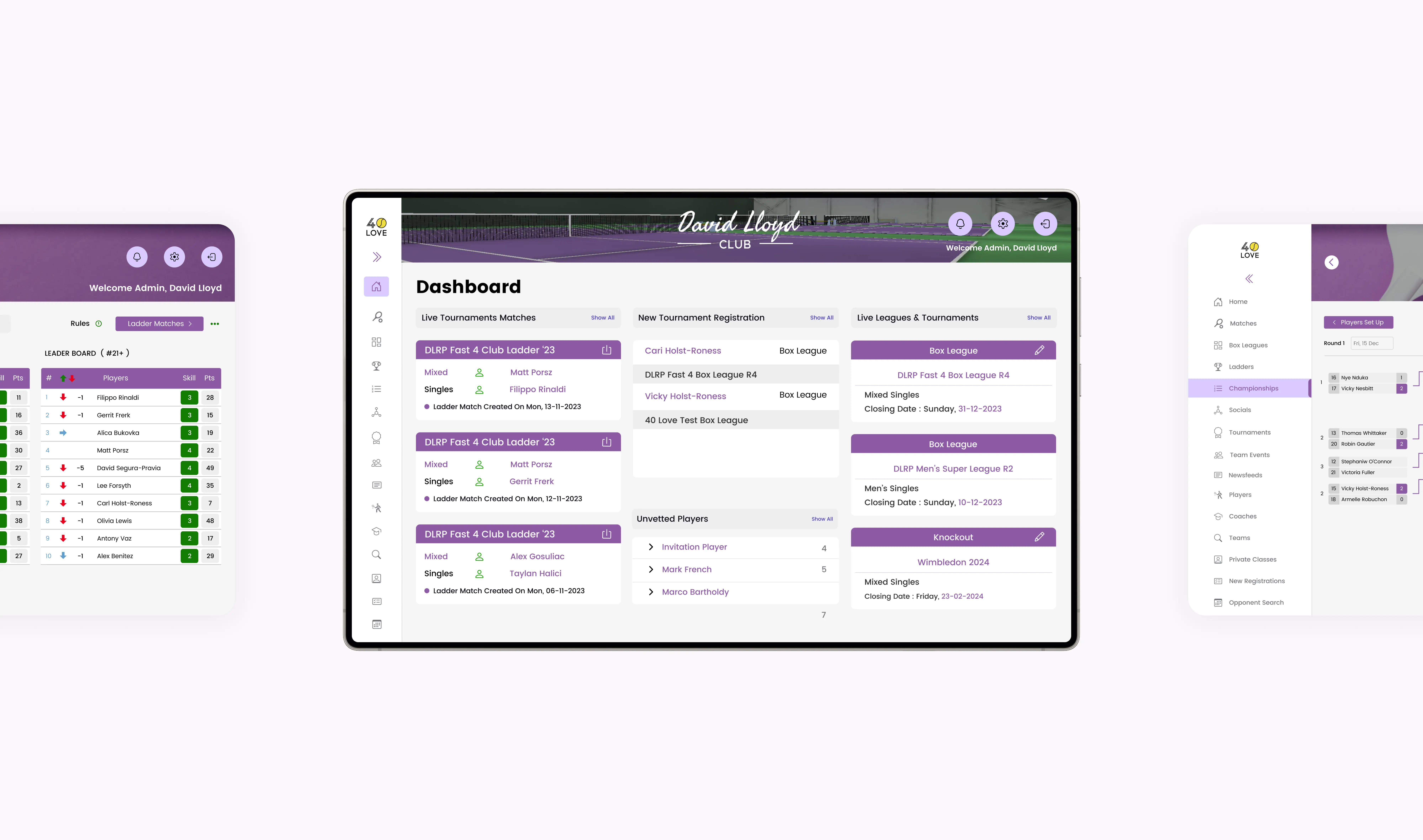
The decisions that shaped the product
01
Not a greenfield build
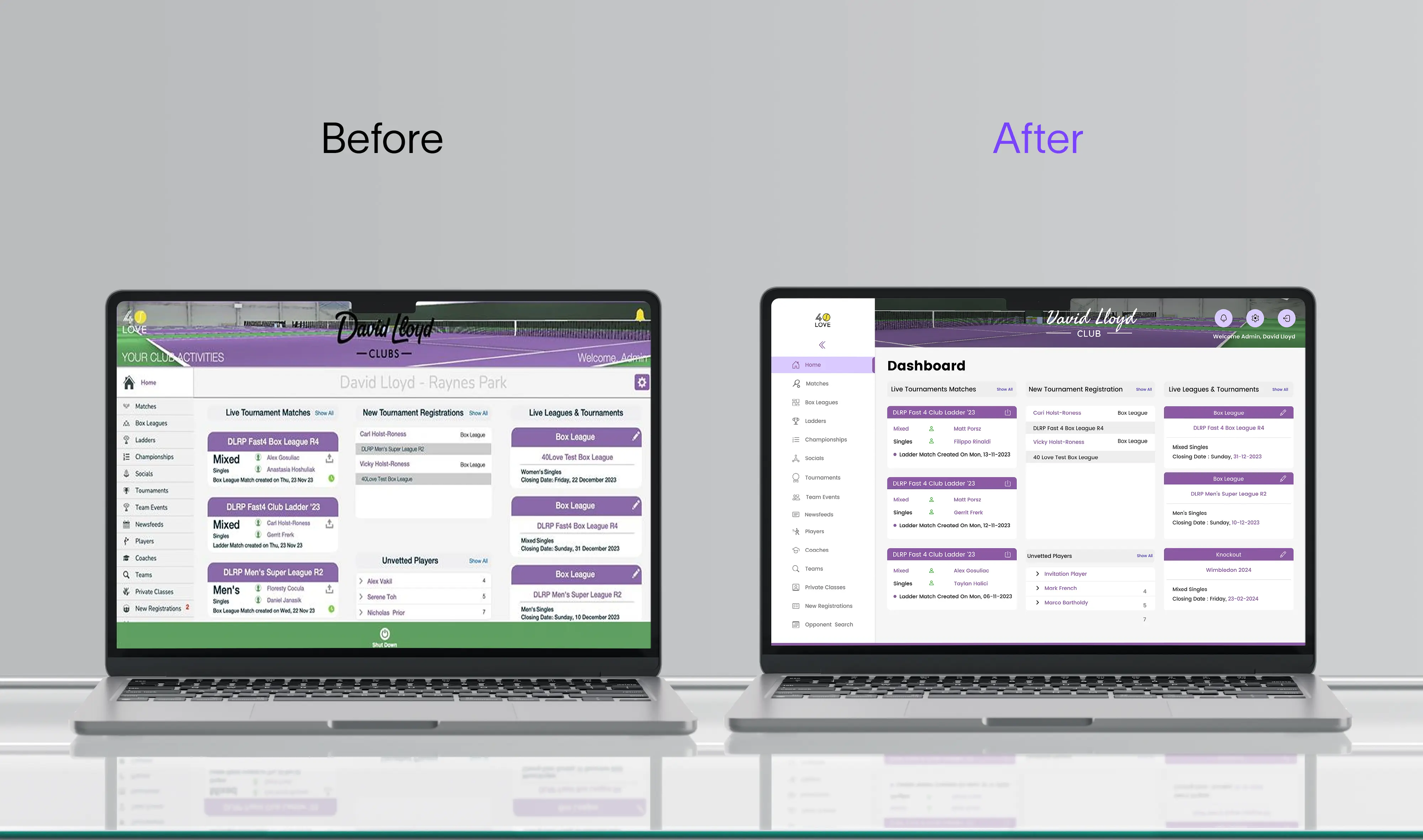
The logic the business ran on lived inside a FileMaker system nobody had documented. We analysed and reverse-engineered it to recover the workflows and data structures, then rebuilt from that rather than from a blank brief.
02
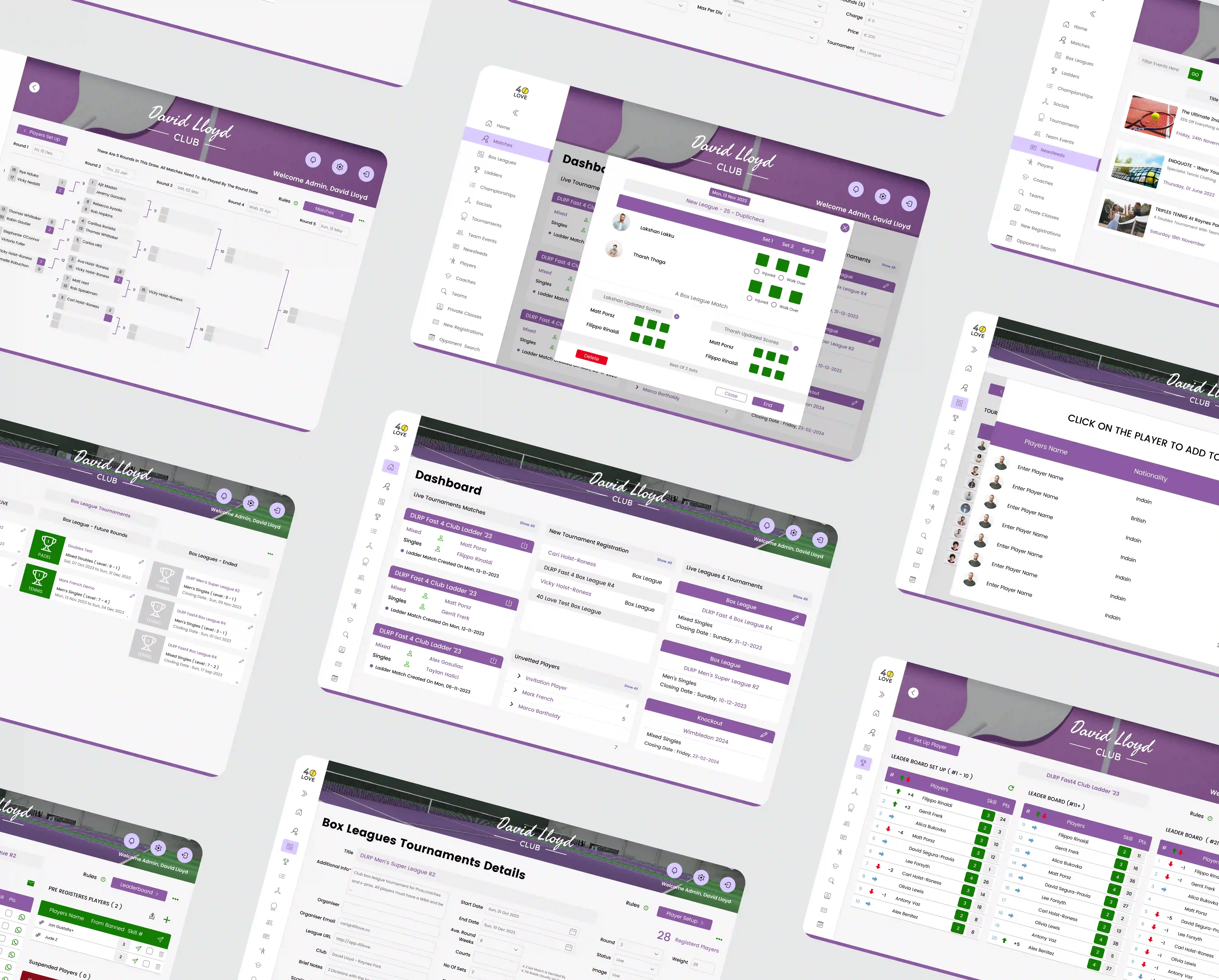
Three roles, three interfaces
Players, coaches, and organisers want different things from the same data. Rather than one interface with permissions layered over it, each role got an interface shaped around the work it actually does.
03
Fewer steps for the tasks that repeat
Tournament setup and bookings happen constantly, and every extra step gets paid for many times over. Both flows were reduced to the minimum number of actions before any visual design started.
04
One brand across web and mobile
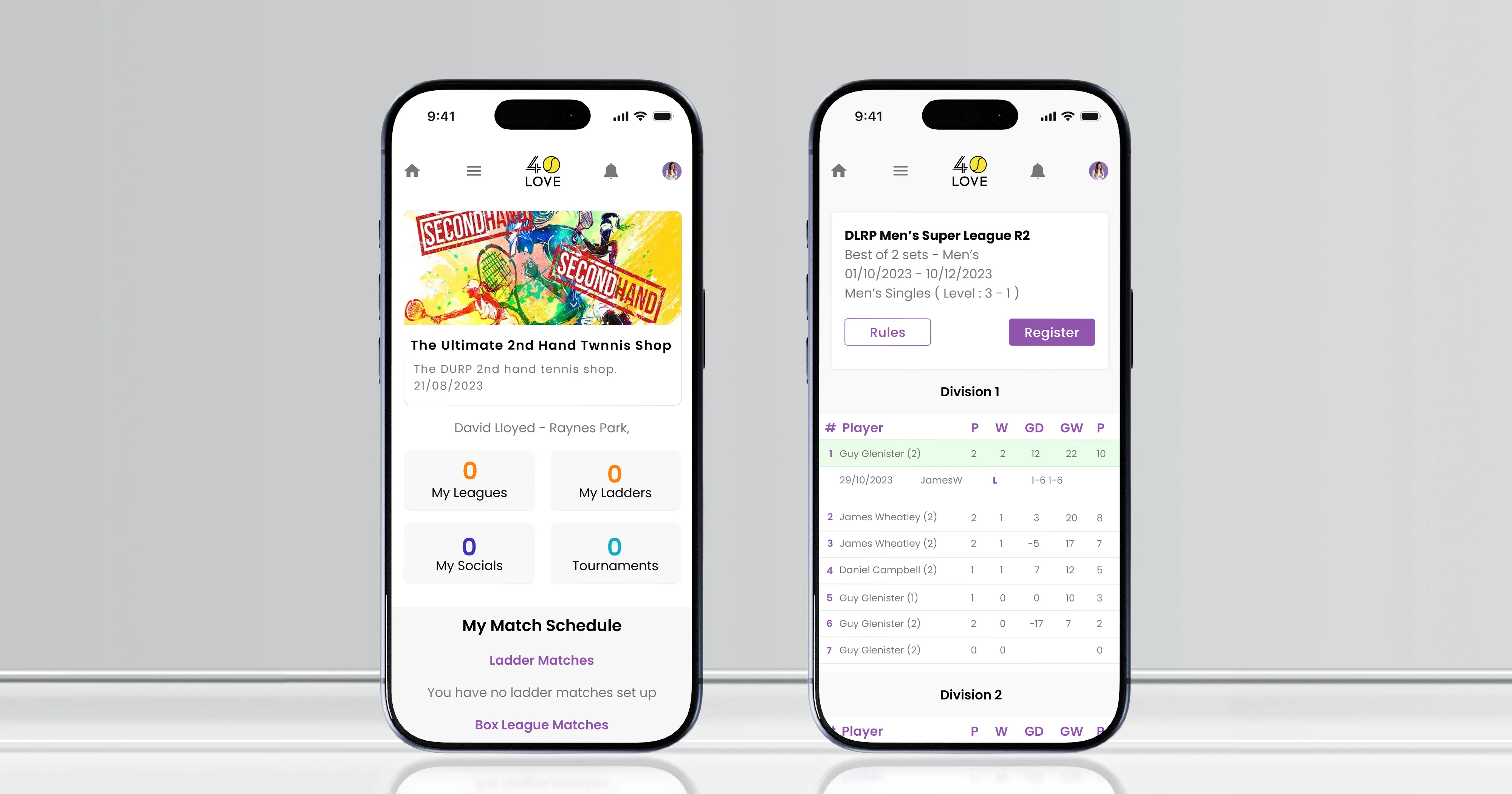
40Love already had a mobile app in its own brand language. The web design system was built to align with it, so a player moving between phone and desktop meets one product rather than two.
Our process that built a scalable solution
Requirements before wireframes
We ran several workshops with the client to map every administrative and operational workflow the FileMaker system supported, then researched competing sports and club management platforms to see which conventions users already expect and which usability traps to avoid. That produced a requirements picture no amount of reading the old system could have given us on its own.
Wireframes validated before design
Low-fidelity wireframes were built in Figma for every screen and signed off before any high-fidelity work began. Structure was agreed while it was still cheap to change, which is what made a two-month timeline possible on a system this broad.
Client inside the testing loop
The client tested and approved decisions as the build progressed rather than at the end, so the MVP stayed anchored to how clubs actually operate. The Figma files were handed over developer-ready, which kept design-to-code moving without a translation step.
Tech stack


What we did
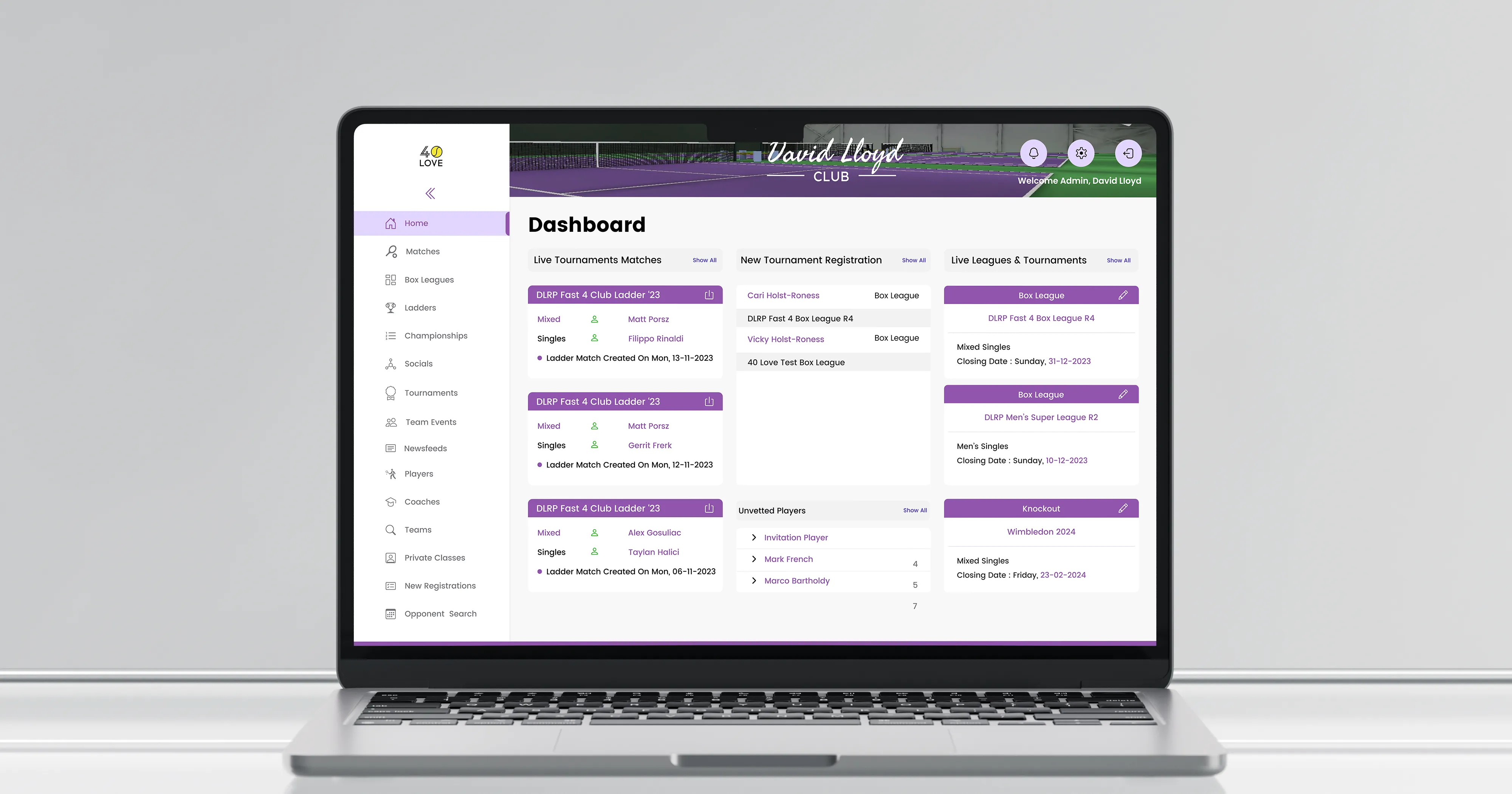
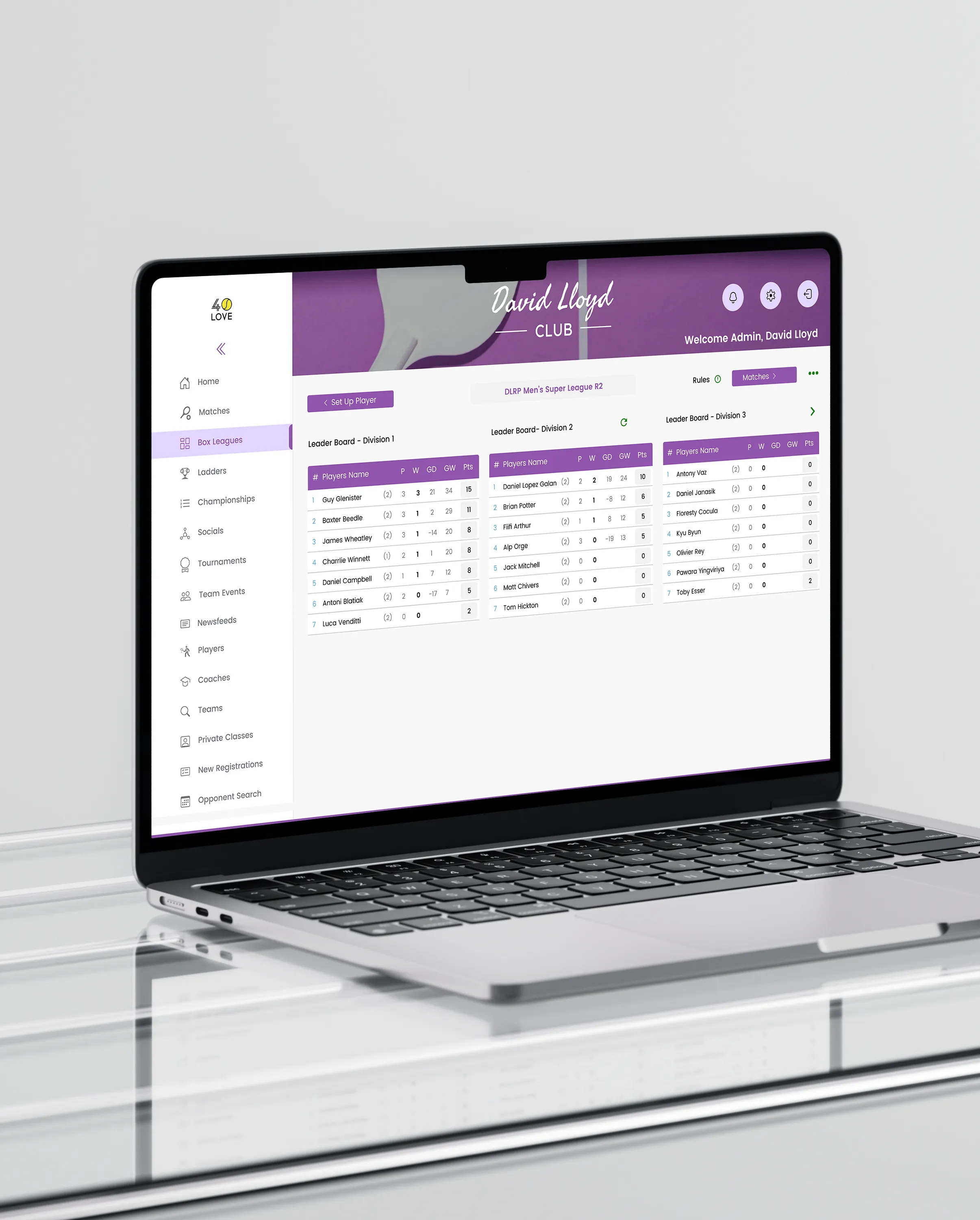
The platform covers club management, tournament organisation, coaching, and payments in one system, with an admin panel for managing tournaments, users, and transactions, and separate interfaces for players, coaches, and organisers. It is fully responsive, so a coach entering results courtside and an organiser working from a desk both get an interface built for the device in their hands.
Result and impact
The outcome that mattered most to the client came after launch: 40Love secured its initial round of investment. An MVP's real job is to prove a product is worth funding, and this one did that. The platform it leaves behind is built to scale across tennis communities in the UK and beyond, rather than being rewritten once the user numbers arrive.
Frequently asked questions
What is an MVP, and how is it different from a full product?
An MVP is the smallest version of a product that proves the idea works with real users. It is not an unfinished product. 40Love's MVP covered club management, tournaments, coaching, and payments, launched in two months, and was complete enough to secure investment.
How long does an MVP take to build?
40Love took two months from kick-off to launch, including reverse-engineering an undocumented legacy system. Most MVPs run six to eight weeks. What moves the number is the number of user roles and how much of the logic already exists somewhere we can recover it from.
Can you rebuild our existing system as a modern platform?
Yes. 40Love ran on locally installed FileMaker Pro with no documentation. We analysed it, recovered the workflows and data structures, and rebuilt the platform on a modern cloud stack. An old system is often a better starting point than a blank brief, because the business logic in it has already been proven.
Will the MVP scale, or will we need to rebuild it later?
It is built to scale. We design the architecture for where the product is going rather than only for launch day, which is why 40Love's platform can take on clubs internationally without being rewritten.
Do we get the design files and the code?
Yes, all of it. 40Love's Figma files were handed over developer-ready, so their team could carry the design forward without going through us.
How involved do we need to be?
More than with most suppliers, by design. 40Love's founder joined requirements workshops, signed off the wireframes, and tested through the build. That involvement is what keeps an MVP anchored to how the business actually works.
How much does an MVP cost in the UK?
Cost follows the number of user roles, the number of modules, and whether an existing system has to be analysed first. Every project is quoted with fixed scope and price in writing before work starts.
What is an MVP, and how is it different from a full product?
An MVP is the smallest version of a product that proves the idea works with real users. It is not an unfinished product. 40Love's MVP covered club management, tournaments, coaching, and payments, launched in two months, and was complete enough to secure investment.
Can you rebuild our existing system as a modern platform?
Yes. 40Love ran on locally installed FileMaker Pro with no documentation. We analysed it, recovered the workflows and data structures, and rebuilt the platform on a modern cloud stack. An old system is often a better starting point than a blank brief, because the business logic in it has already been proven.
Do we get the design files and the code?
Yes, all of it. 40Love's Figma files were handed over developer-ready, so their team could carry the design forward without going through us.
How much does an MVP cost in the UK?
Cost follows the number of user roles, the number of modules, and whether an existing system has to be analysed first. Every project is quoted with fixed scope and price in writing before work starts.
How long does an MVP take to build?
40Love took two months from kick-off to launch, including reverse-engineering an undocumented legacy system. Most MVPs run six to eight weeks. What moves the number is the number of user roles and how much of the logic already exists somewhere we can recover it from.
Will the MVP scale, or will we need to rebuild it later?
It is built to scale. We design the architecture for where the product is going rather than only for launch day, which is why 40Love's platform can take on clubs internationally without being rewritten.
How involved do we need to be?
More than with most suppliers, by design. 40Love's founder joined requirements workshops, signed off the wireframes, and tested through the build. That involvement is what keeps an MVP anchored to how the business actually works.
Got an idea that needs building properly?

Tell us what you are building. We will scope it and give you an honest view of the right approach and what it will cost.
40Love mobile app MVP
We also built the 40Love mobile app for players. See that case study.
Read the case study →