Taking a digital legacy platform from idea to a working MVP in two months
About the Client.
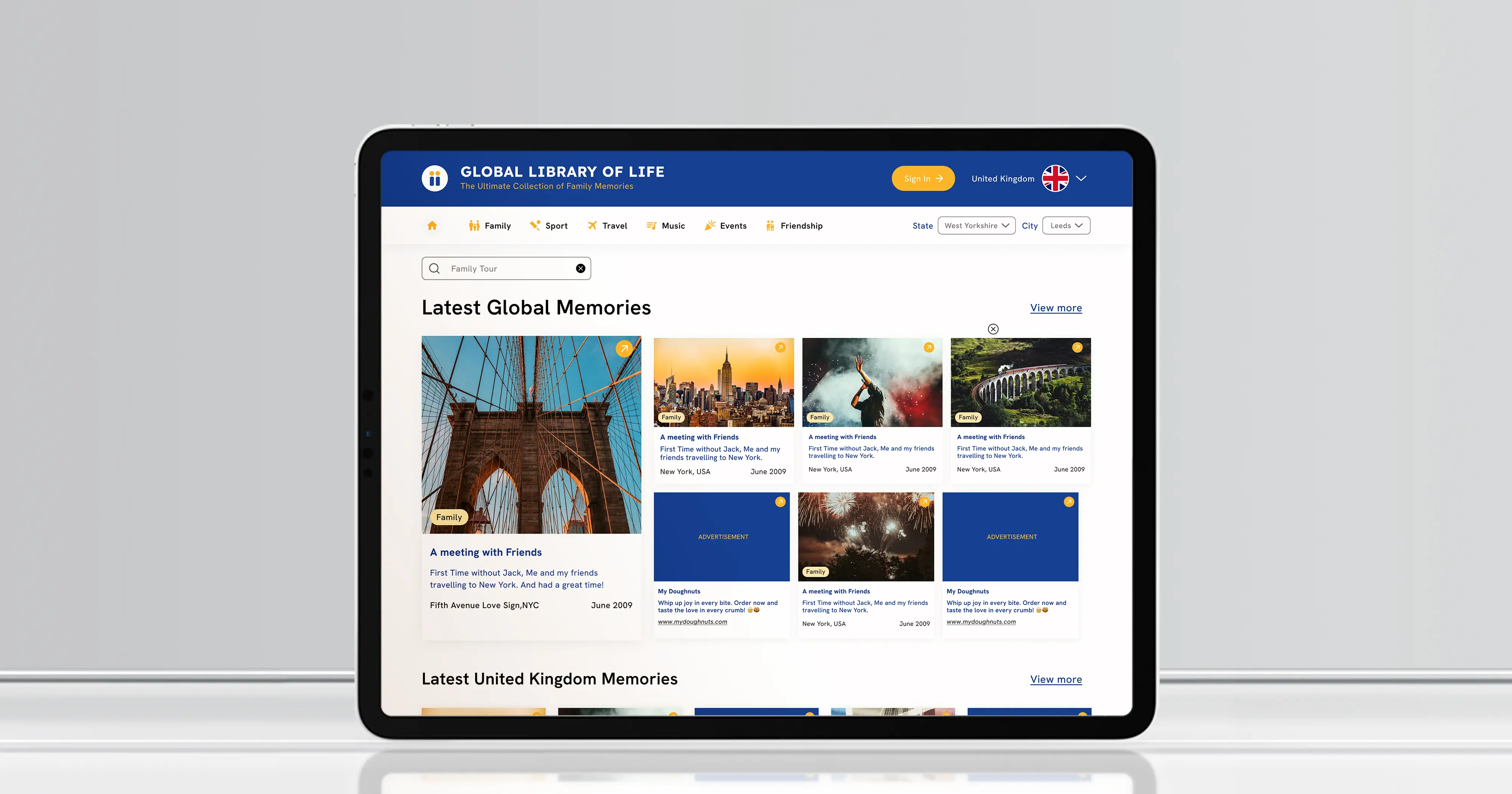
Miigen, Library of Life, is a digital legacy platform for preserving and sharing life stories in text, images, and audio, so that milestones and reflections can be passed down across generations. Alongside the storytelling, the platform carries an advertising layer that lets individuals and businesses reach location-specific audiences. Craig came to us at the idea stage, with no existing product to build on.
02
Months from idea to working MVP04
User groups served in one platform65
Screens built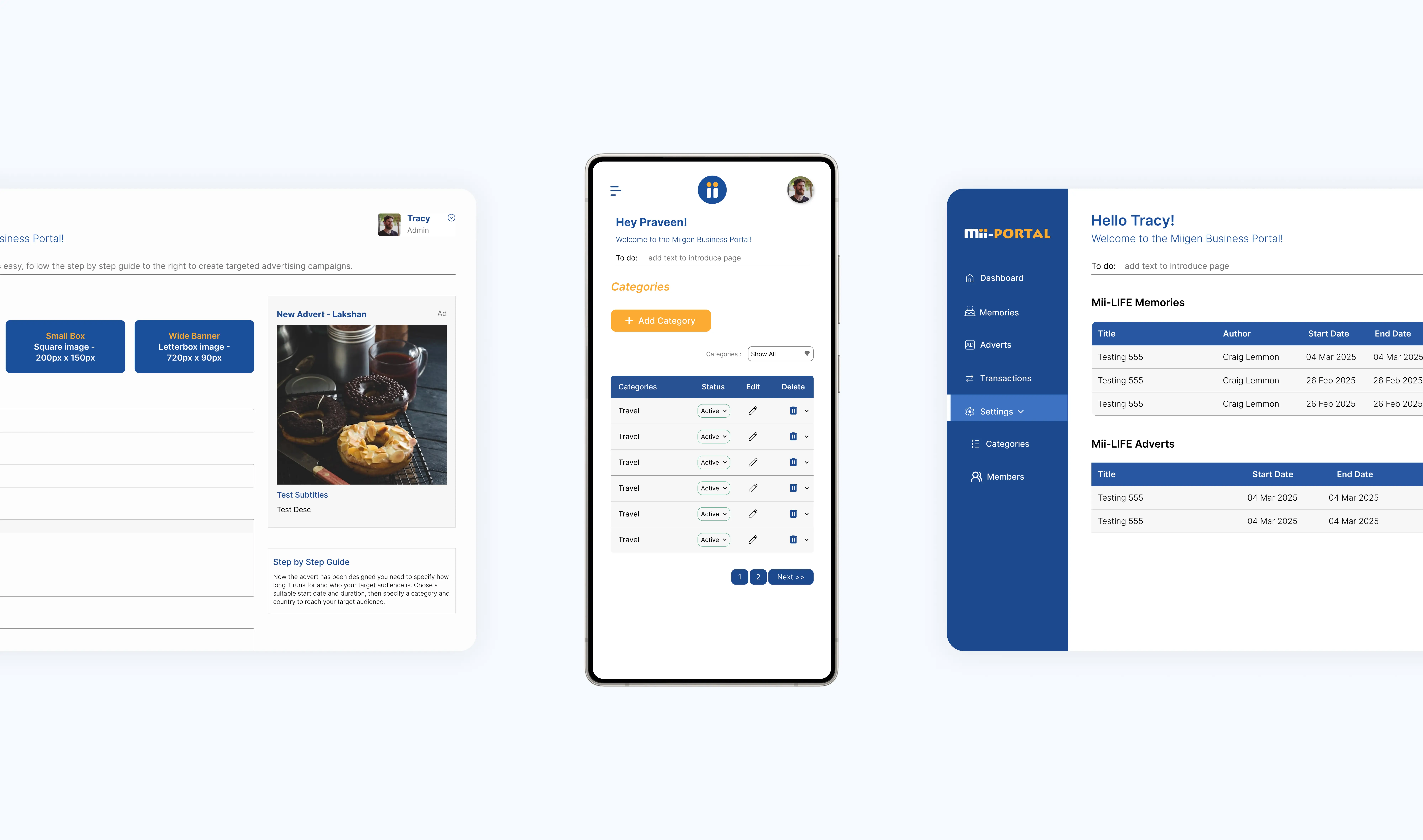
The decisions that shaped the product
01
Three audiences with opposing needs
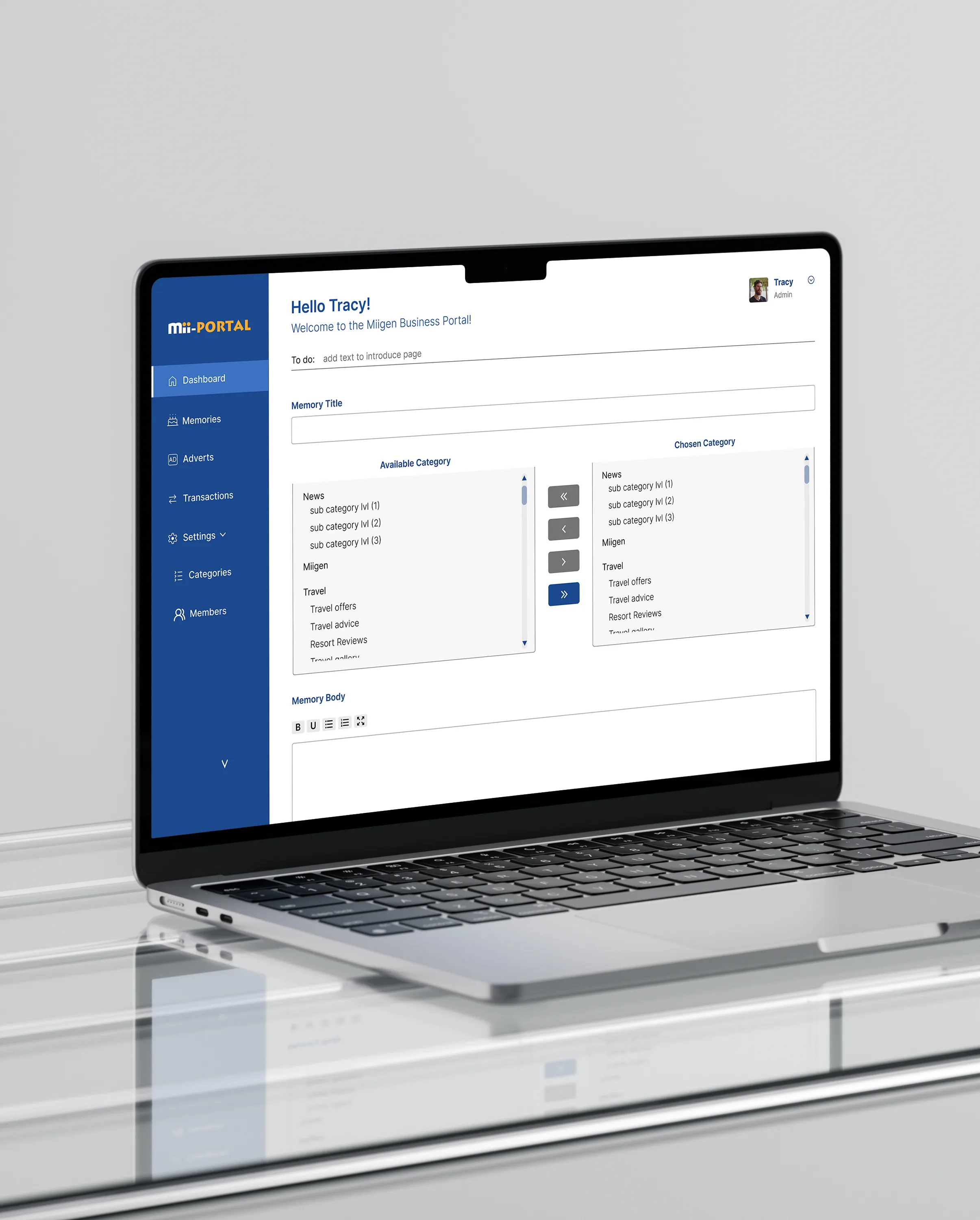
Memory creators, people browsing stories, and advertisers all wanted different things from the same platform. Rather than one interface with features switched on and off, each group got a clearly defined space built around what it came to do.
02
Advertising that does not interrupt the story
The platform needed advertising revenue without cheapening the experience of reading someone's life story. Ad placements, filters, and content layouts went through several rounds of refinement specifically to find that line.
03
Built for users of any technical ability
People documenting a lifetime are frequently not the people most comfortable with software. The editor, the photo and audio upload flows, and the navigation were all designed to be legible on first encounter rather than learned.
04
Multimedia without clutter
Text, images, and audio in one place usually produces a crowded interface. Category-based organisation and location tagging at country, state, and city level carry the structure, so the screen stays calm while the content underneath is rich.
Our process that built a scalable solution
Structure before surface
We started with low-fidelity wireframes mapping the structure and the flows for each of the three user groups. With an idea-stage product there is nothing to audit, so this is where the product actually gets decided. Getting it agreed on paper is what made a two-month build possible.
A custom design system
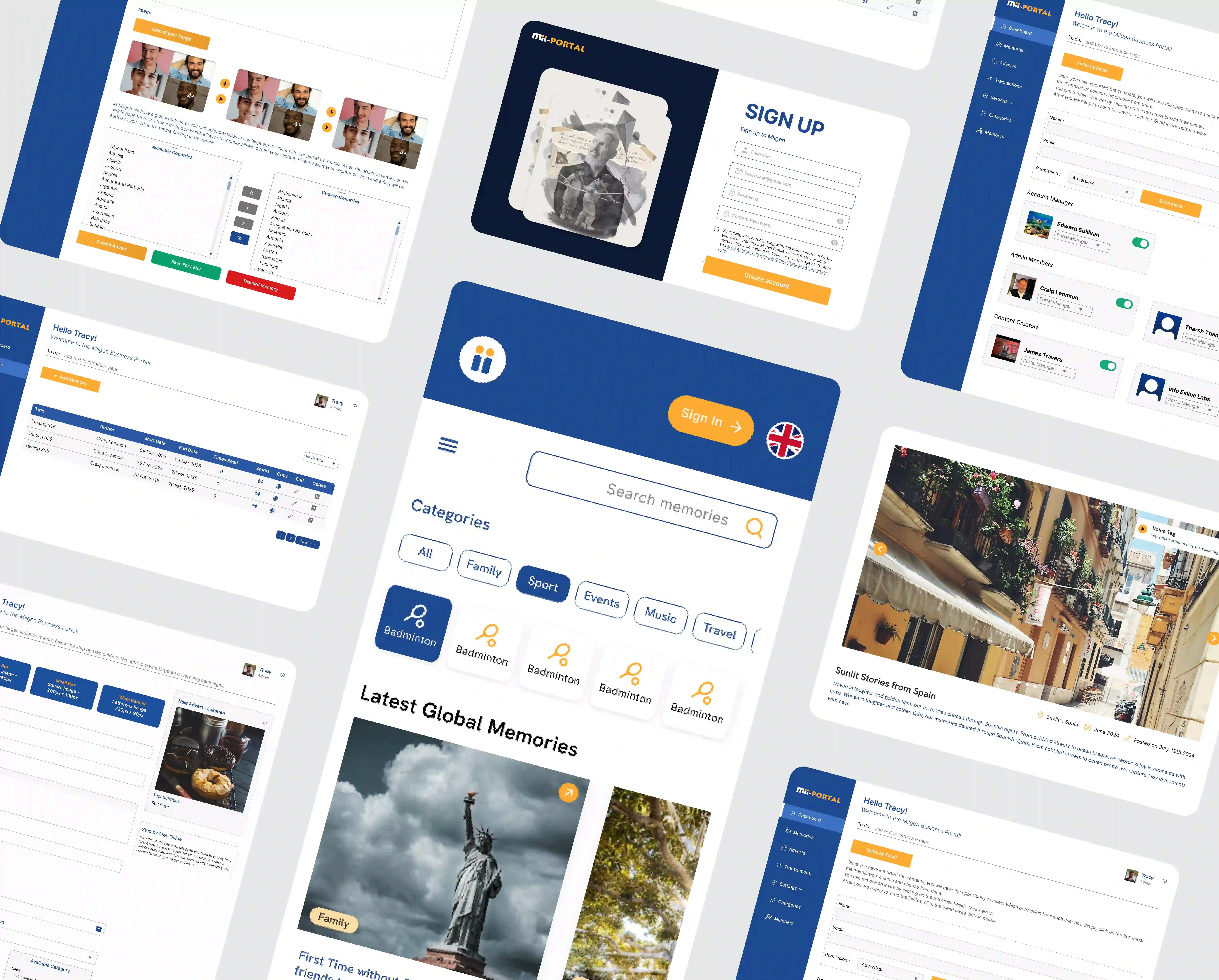
A bespoke design system was built for the platform rather than assembled from components, covering typography, colour, and layout across every section. That kept a broad product visually coherent and gave the client something that extends as features are added after the MVP.
Feedback cycles where they mattered
Rather than reviewing everything equally, we ran multiple feedback rounds on the parts carrying the most risk: ad placements, content filters, and feed layouts. Those are the decisions that determine whether the advertising model works without damaging the storytelling.
Tech stack


What we did
Underneath, the platform was built to grow rather than to demonstrate. Laravel carries the backend, MySQL holds the structured data, and Amazon S3 handles media, so photo and audio libraries scale without the platform slowing down. API authentication is already in place for the mobile app that comes after the web product, which means the next phase does not start with a rebuild.
Result and impact
The MVP exists to answer one question, which is whether the concept is worth funding, and Craig is now taking it to investors on that basis. What he has to show them is not a prototype: it is a secure, scalable platform with the architecture already in place for the features that come next, built by the same team that designed it. The work that would usually follow a funding round, deciding the product and proving it holds together, is already done.
Frequently asked questions
We only have an idea. Is that enough to start?
Yes. Miigen came to us at the idea stage with nothing built. We start with structure and flows rather than features, because on a product that does not exist yet, agreeing what it is comes before building it.
How do you build one product for several different types of user?
By giving each group its own space rather than one interface with permissions over the top. Miigen serves memory creators, people browsing stories, and advertisers, and each has an interface shaped around what they came to do. Trying to serve all three with one screen is what makes products like this feel complicated.
Will the MVP handle growth, or will it need rebuilding?
It is built to grow. Miigen's media sits in Amazon S3 and its structured data in MySQL, so a growing library of photos and audio does not slow the platform down, and the API authentication for a future mobile app is already in place.
Can you build a revenue model into an MVP?
Yes, and it usually needs the most design attention. Miigen's advertising layer had to generate revenue without interrupting people reading life stories, so ad placements and feed layouts went through several rounds of refinement before anything was built.
What do we have at the end that we can take to investors?
A working product rather than a prototype, plus the design system and files behind it. Craig is raising on the Miigen MVP now, and what he is showing is a secure platform with the next phase already accounted for in its architecture.
Do you build mobile apps after the web MVP?
Frequently, and we plan for it during the web build. Miigen's API authentication was put in place specifically so the mobile phase would not start with a rebuild.
How much does an MVP cost in the UK?
Cost follows the number of user groups, the number of modules, and how much of the product still has to be decided. Every project is quoted with fixed scope and price in writing before work starts.
We only have an idea. Is that enough to start?
Yes. Miigen came to us at the idea stage with nothing built. We start with structure and flows rather than features, because on a product that does not exist yet, agreeing what it is comes before building it.
Will the MVP handle growth, or will it need rebuilding?
It is built to grow. Miigen's media sits in Amazon S3 and its structured data in MySQL, so a growing library of photos and audio does not slow the platform down, and the API authentication for a future mobile app is already in place.
What do we have at the end that we can take to investors?
A working product rather than a prototype, plus the design system and files behind it. Craig is raising on the Miigen MVP now, and what he is showing is a secure platform with the next phase already accounted for in its architecture.
How much does an MVP cost in the UK?
Cost follows the number of user groups, the number of modules, and how much of the product still has to be decided. Every project is quoted with fixed scope and price in writing before work starts.
How do you build one product for several different types of user?
By giving each group its own space rather than one interface with permissions over the top. Miigen serves memory creators, people browsing stories, and advertisers, and each has an interface shaped around what they came to do. Trying to serve all three with one screen is what makes products like this feel complicated.
Can you build a revenue model into an MVP?
Yes, and it usually needs the most design attention. Miigen's advertising layer had to generate revenue without interrupting people reading life stories, so ad placements and feed layouts went through several rounds of refinement before anything was built.
Do you build mobile apps after the web MVP?
Frequently, and we plan for it during the web build. Miigen's API authentication was put in place specifically so the mobile phase would not start with a rebuild.
Got an idea that needs building properly?

Tell us what you are building. We will scope it and give you an honest view of the right approach and what it will cost.
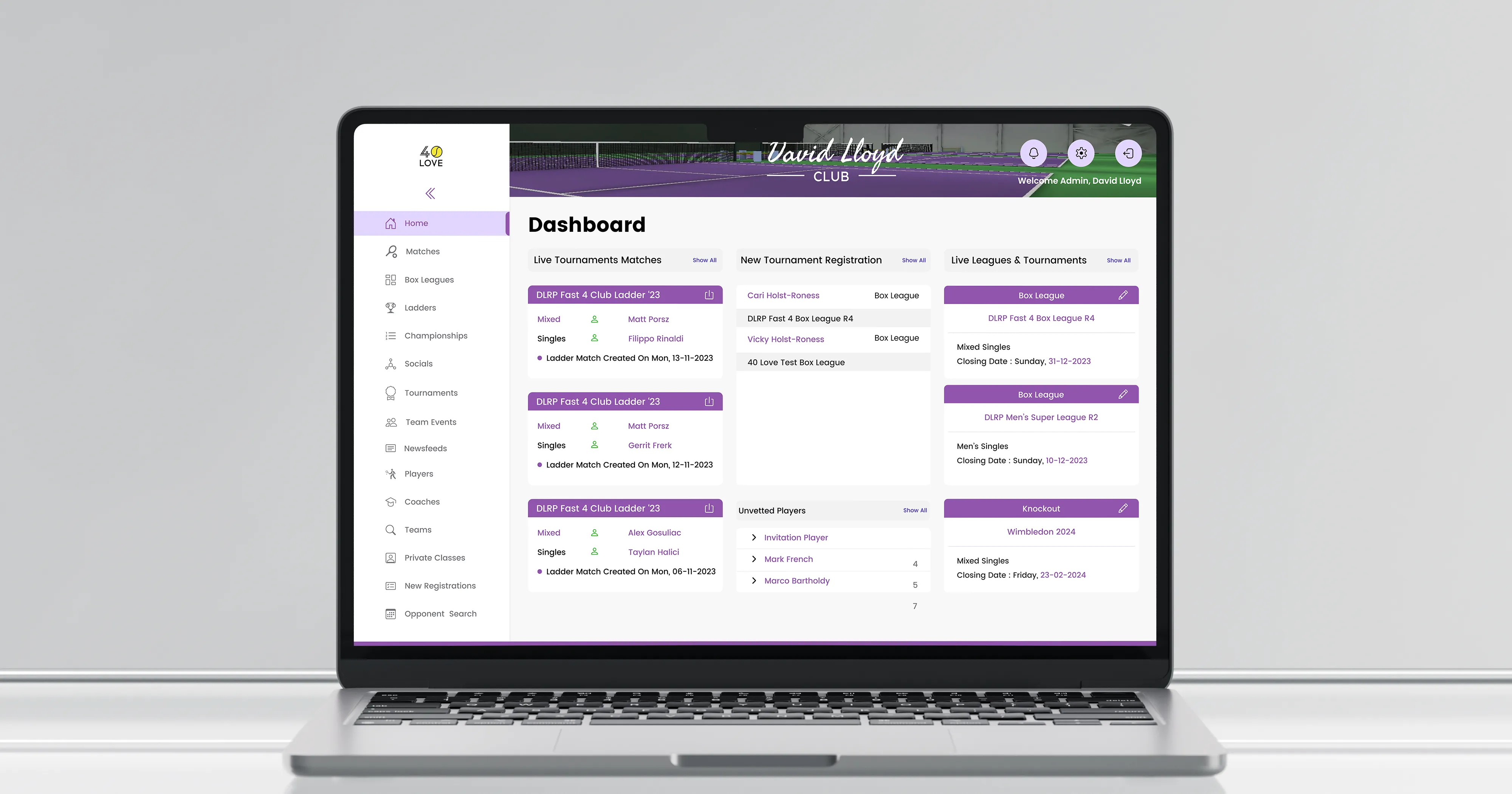
40Love club management MVP
Another idea-stage product taken to a funded MVP: see how we built 40Love's club management platform.
Read the case study →