Rebuilding a specialist e-commerce store around what its customers actually said
About the Client.
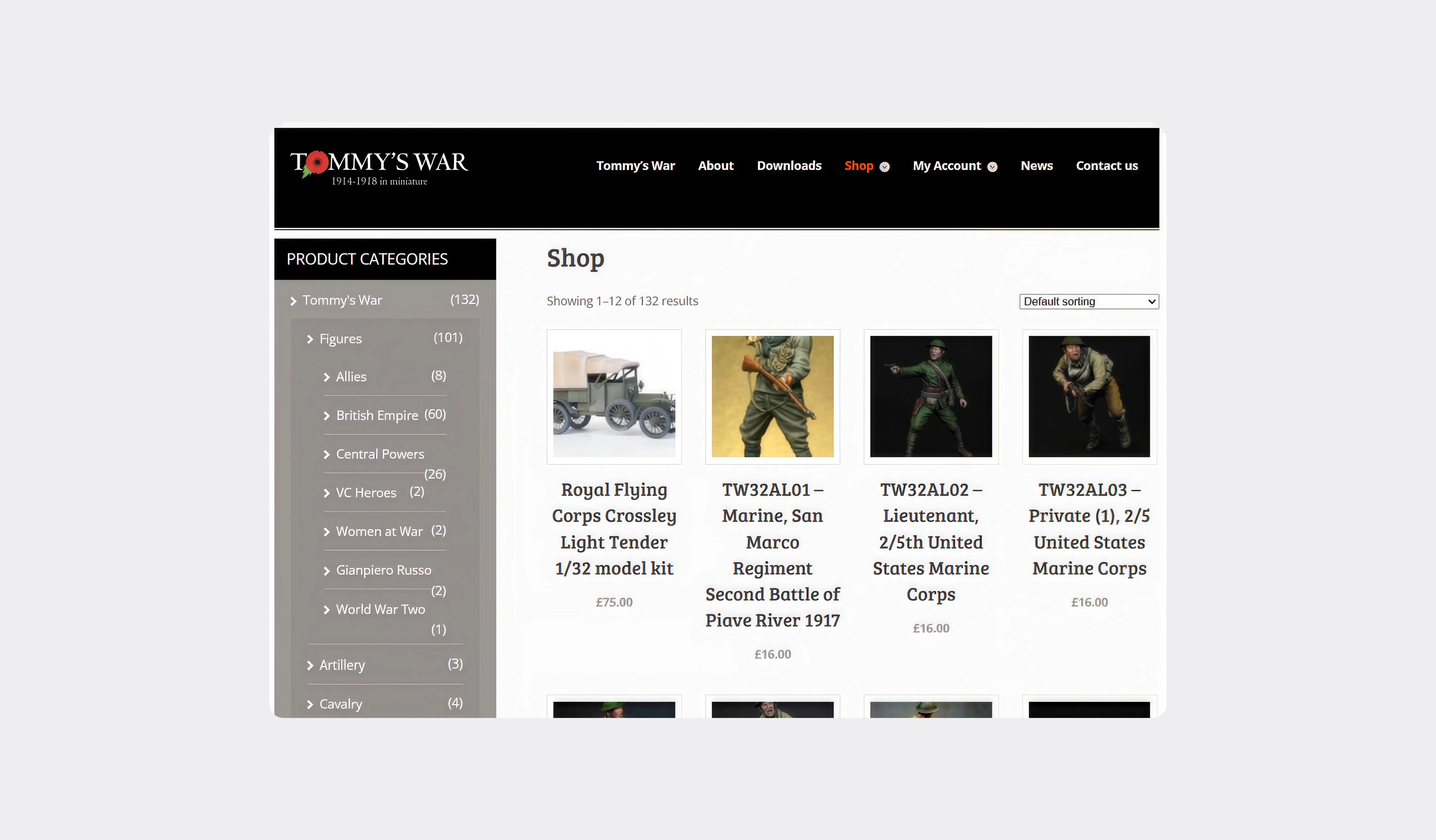
Tommy's War sells finely detailed World War One model figures and accessories to modellers and history enthusiasts worldwide. The business had an established customer base and a serious product, and a website that served neither. It ran on a generic WooCommerce template, loaded slowly, and was difficult to buy from on a phone. Customers were telling the owner as much, and carts were being abandoned.
02
Months from kick-off to launch83%
Increase in sales in the first month, reported by the client02
Steps in the new checkout, down from the previous flow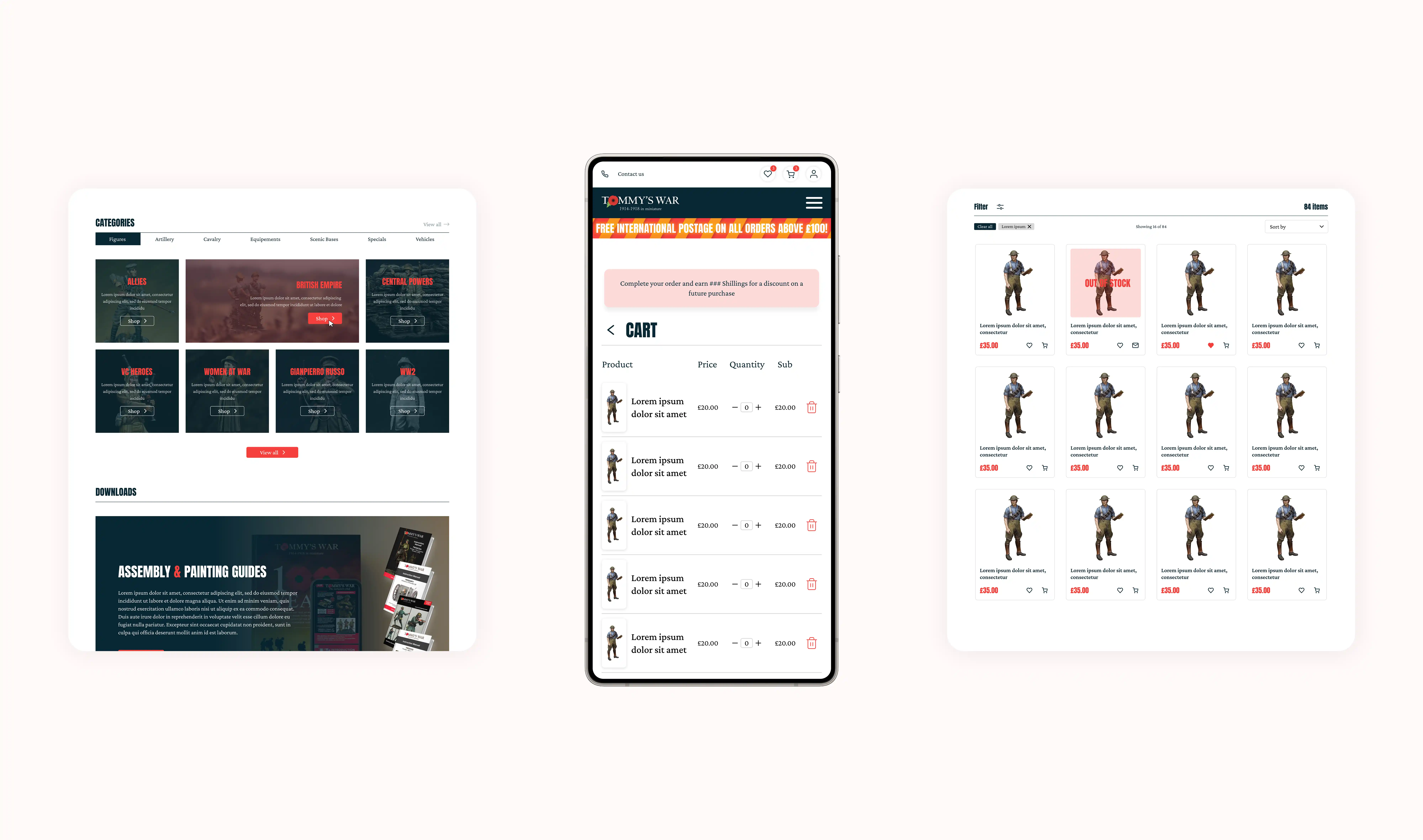
How we approached challenges
01
A generic template for a specialist catalogue
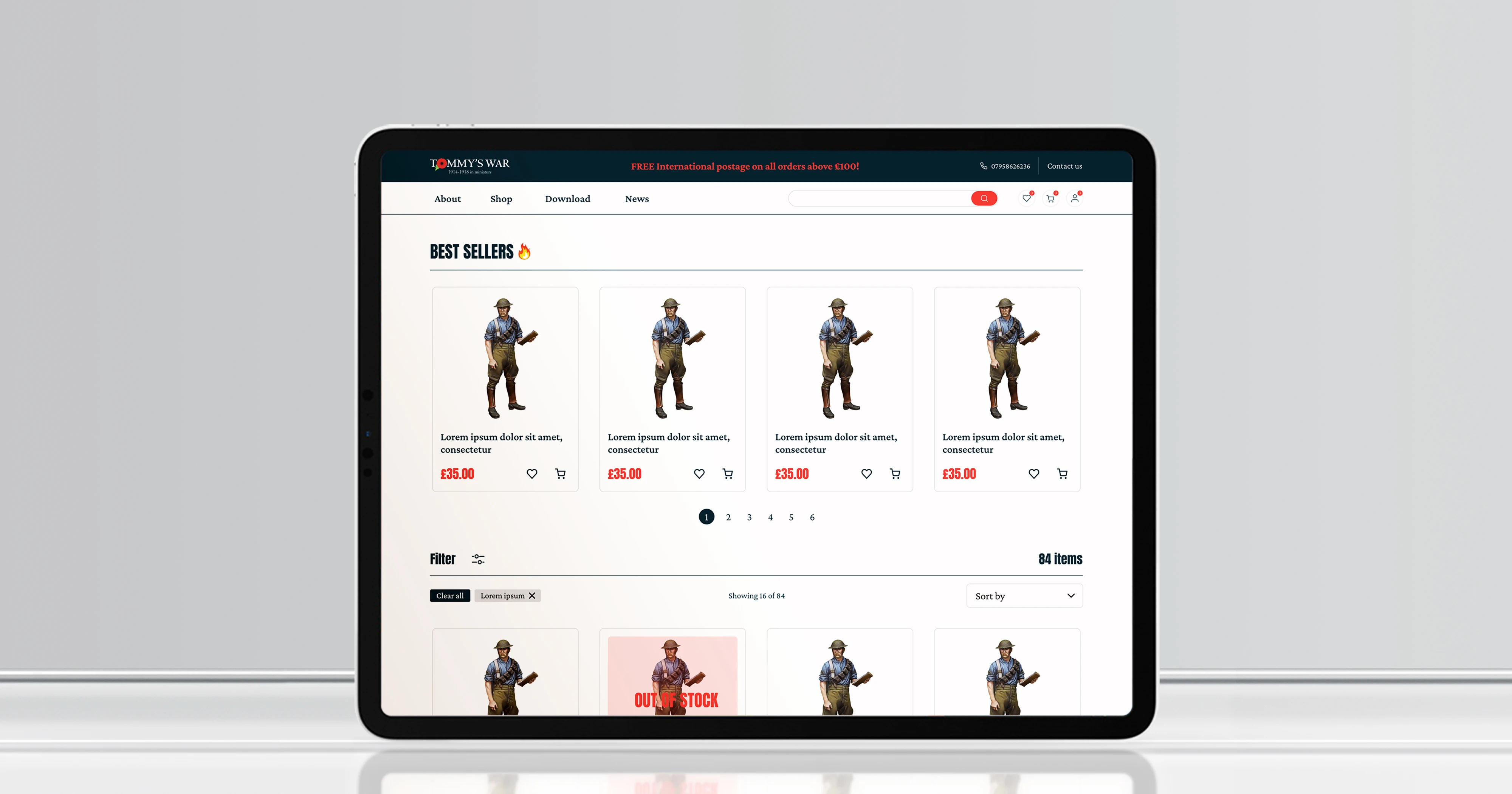
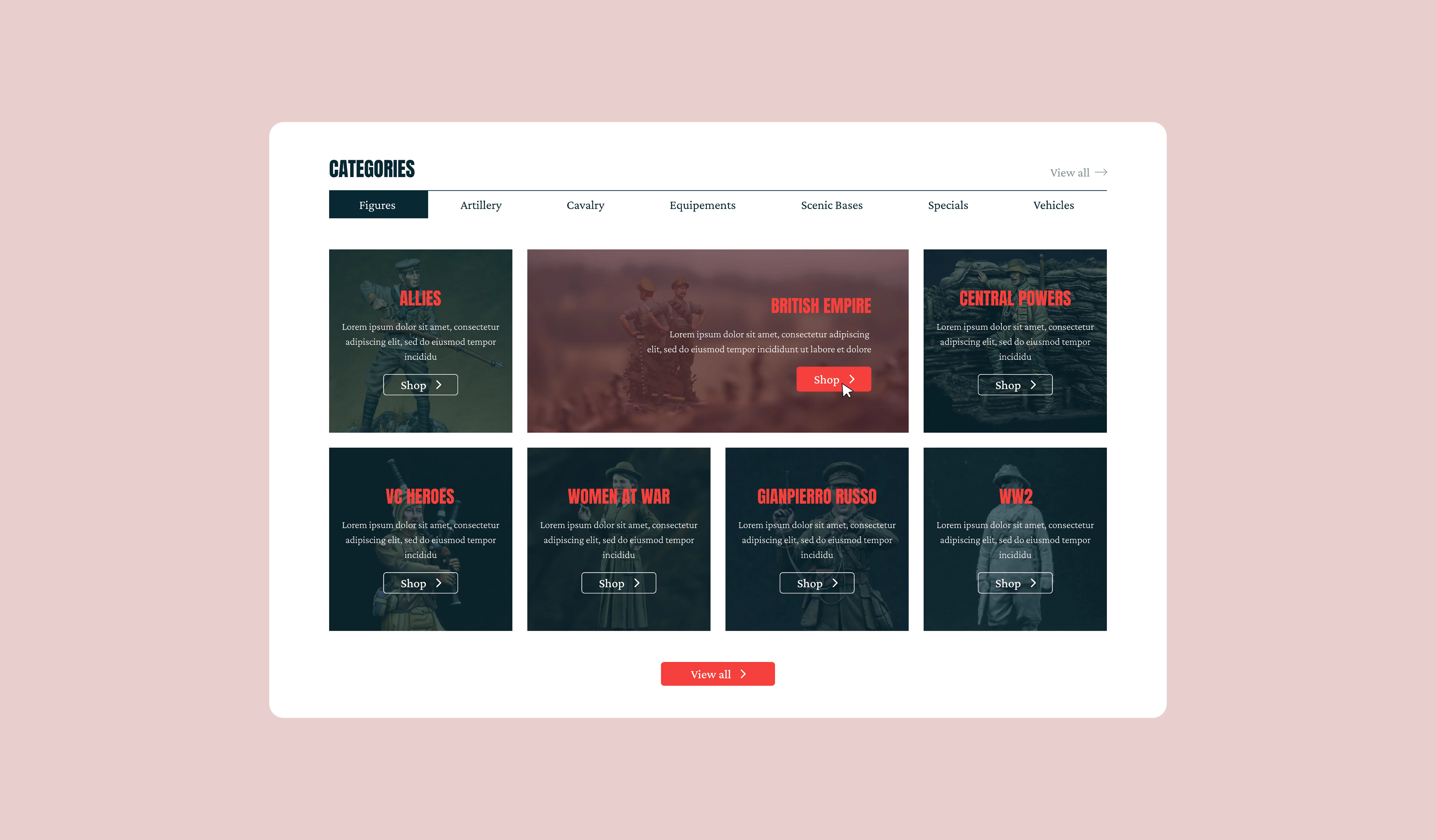
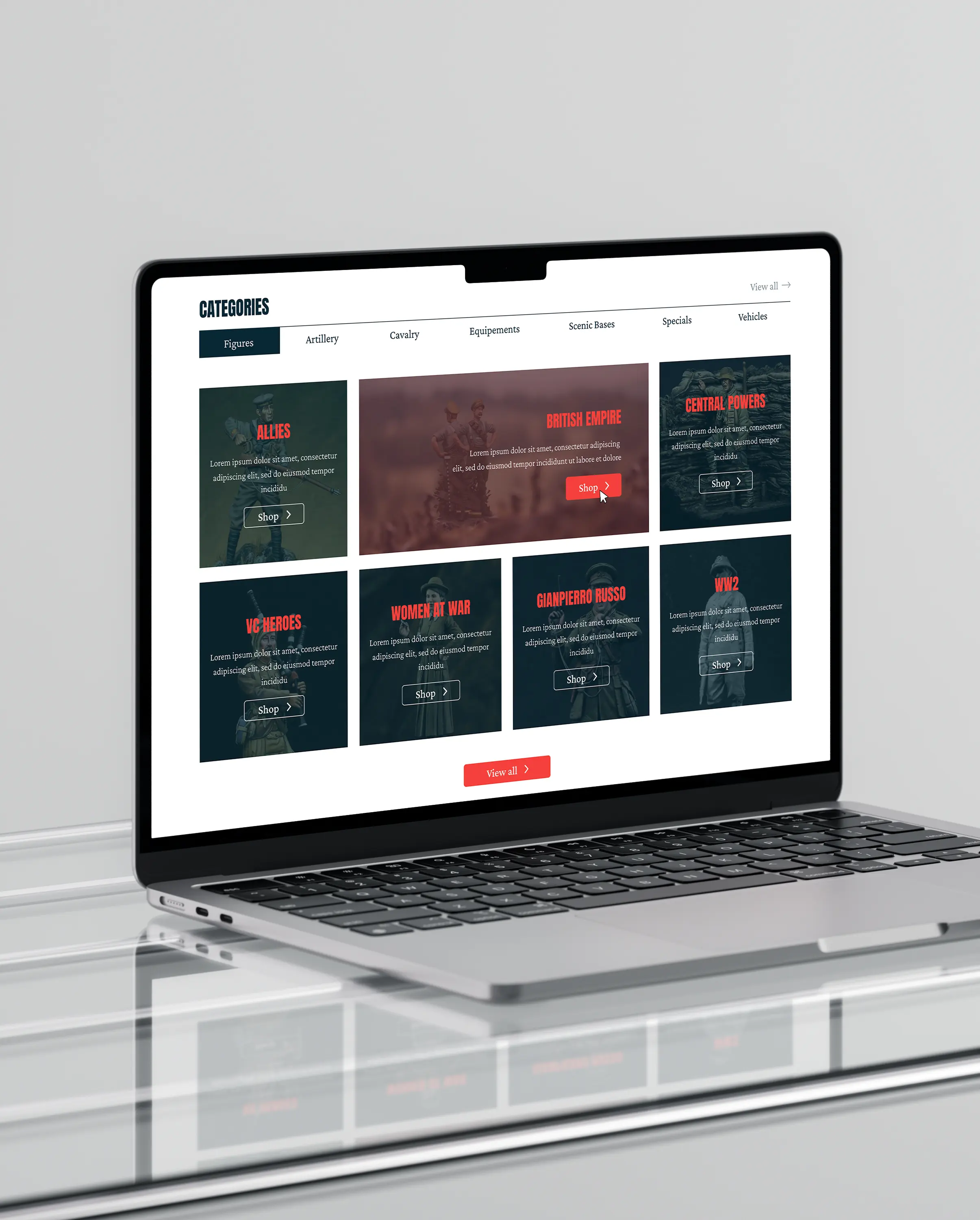
Model figures are bought by people who study the detail before purchasing. A stock WooCommerce theme gave them no way to do that properly. Product and category pages were rebuilt around how collectors actually browse, look closely, and compare.
02
Mobile as the main problem, not a secondary view
Most of the friction was on phones: slow loading, a complicated purchase flow, and a journey that lost people before checkout. The redesign was built mobile first, then extended to desktop, rather than the other way round.
03
A checkout with too many chances to leave
Every additional step is another opportunity to abandon a cart. The purchase flow was reduced to three steps, with a side cart so customers can keep adding without losing their place in the catalogue.
04
Templates the client could not touch
The previous setup left the owner unable to change product presentation. Advanced Custom Fields Pro powers custom WooCommerce templates that the client can edit, so the site could keep pace with a growing catalogue.
Our process that built a scalable solution
We interviewed the actual customers
This is the part worth noticing. Rather than relying on stakeholder opinion, we ran interviews with real Tommy's War customers, mapped the pain points in the existing purchase flow, and defined personas from what we heard: hobbyists, history enthusiasts, and gift buyers, each arriving with different knowledge and different urgency. A gift buyer in December and a modeller comparing regiments need different things from the same catalogue.
A purchase flow per user type, then bespoke design
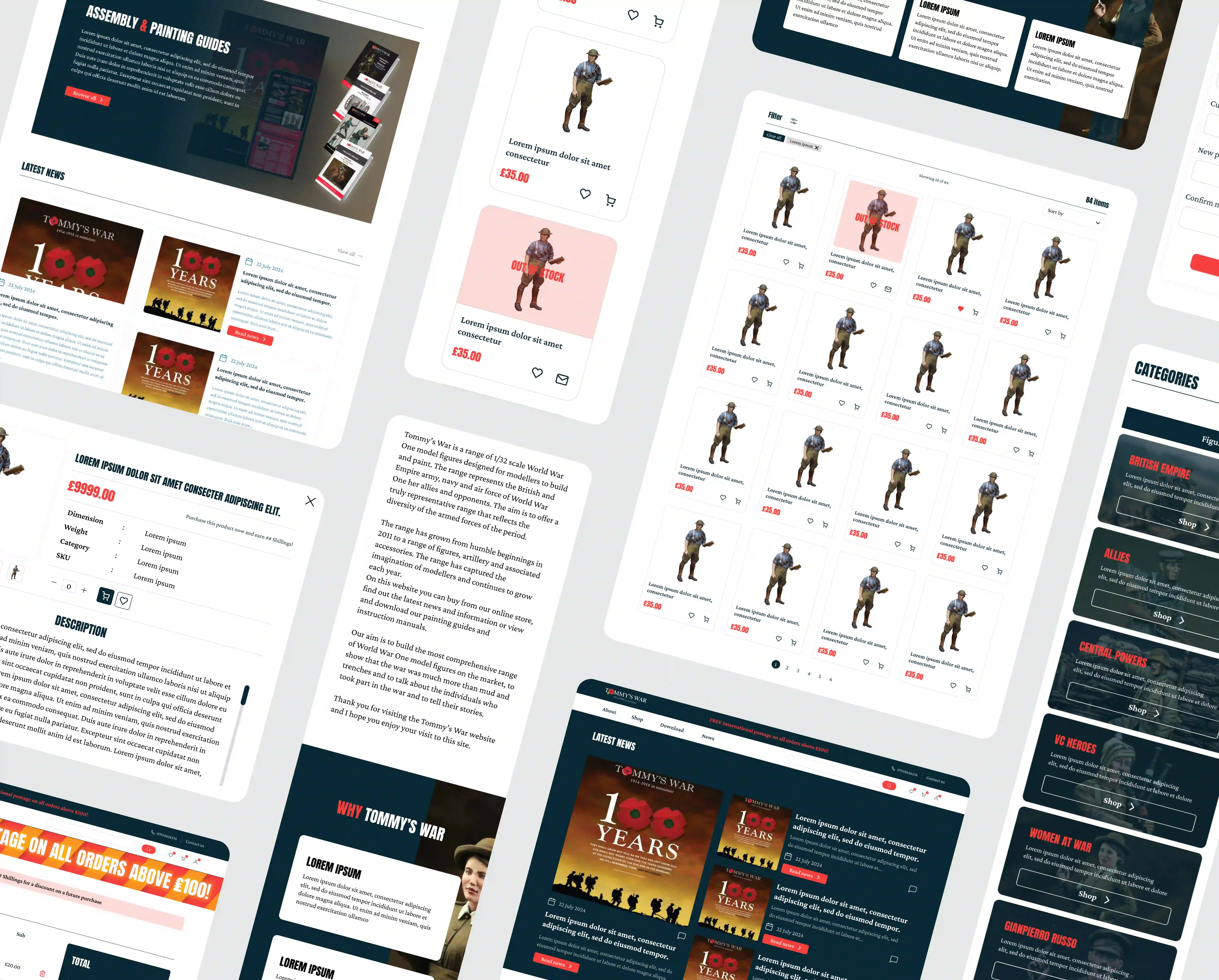
From that research we built a recommended purchase flow for each persona, focused on fewer steps to checkout, better product discovery, and unambiguous calls to action. Our designer then produced bespoke designs for the home and category pages, product pages, cart and side cart, and a three-step checkout, with interactive prototypes across mobile and desktop so the client saw the responsive experience before development began.
Built on WooCommerce, protected at launch
Discovery to launch took two months. The site was rebuilt on WordPress and WooCommerce with Elementor Pro and custom ACF-driven templates, then taken through QA covering cross-device behaviour, purchase flow validation, speed, and content accuracy. On-page SEO and structured 301 redirects went in before launch to protect the traffic the business had already earned, with GA4 and Search Console connected for monitoring afterwards.
Tech stack


What we did
The build is WordPress and WooCommerce with custom ACF-driven product templates, which means the owner could edit product presentation without a developer. Performance work kept a product and image-heavy catalogue fast, and structured 301 redirects carried the existing search traffic onto the new site rather than starting it again from nothing.
Result and impact
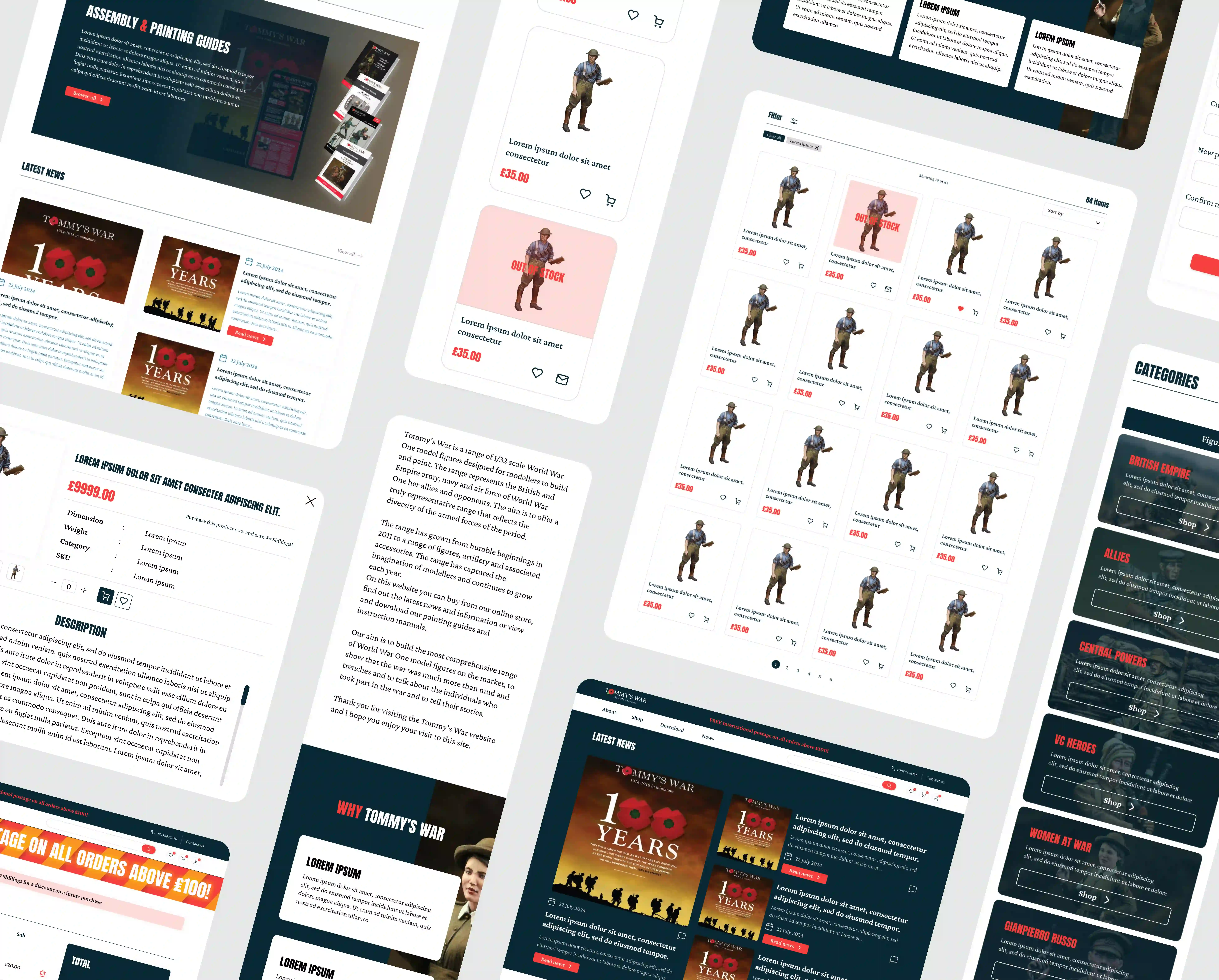
The user-facing outcome is simpler to state. A store that was hard to buy from on a phone became one that works there first, with a three-step checkout and product pages built for people who examine detail before purchasing. Customer feedback and community reviews after launch reflected that. For a specialist retailer with a loyal audience, removing the friction between wanting something and owning it is most of the work.
Following the rebuild and the increase in orders, the owner sold the business at a strong valuation. Published with their permission.
Frequently asked questions
Can a redesign really increase sales that much?
It can when the previous site was the bottleneck. Tommy's War had an established audience that struggled to buy on mobile, so removing the friction released demand that already existed. The owner reported over 83% growth in the first month. A redesign will not create demand that is not there, and we will say so if we think that is your situation.
Do you interview our customers, or just talk to us?
Your customers, where we can. On Tommy's War we interviewed real buyers and built personas from what they told us, which is how we found that hobbyists, history enthusiasts, and gift buyers each needed a different route through the same catalogue. Stakeholder opinion alone tends to confirm what the business already believes.
Will we lose our search traffic?
Not with a redirect strategy in place before launch. Tommy's War's existing traffic was carried across with structured 301 redirects, and GA4 and Search Console were connected so performance could be monitored from day one.
Can we manage our own product pages afterwards?
Yes. The WooCommerce templates were built with Advanced Custom Fields Pro so the client could edit product presentation without a developer. On a growing catalogue that matters more than almost anything else in the build.
Should we rebuild on WooCommerce or move to Shopify?
It depends on your catalogue, your fulfilment, and who maintains the site. Tommy's War stayed on WooCommerce because it needed bespoke product templates and full control. Where a business wants less to maintain, Shopify is often the better answer, and we have extended a Shopify store into a mobile app for another client.
How do you improve mobile conversion specifically?
By designing for mobile first and treating checkout as the priority. Tommy's War went to a three-step checkout with a side cart, so customers can keep browsing without losing their basket. Most abandoned carts are a design problem rather than a pricing one.
How much does an e-commerce redesign cost?
Cost follows the size of your catalogue, how much research is in scope, and whether product templates need building bespoke. Every project is quoted with fixed scope and price in writing before work starts.
Can a redesign really increase sales that much?
It can when the previous site was the bottleneck. Tommy's War had an established audience that struggled to buy on mobile, so removing the friction released demand that already existed. The owner reported over 83% growth in the first month. A redesign will not create demand that is not there, and we will say so if we think that is your situation.
Will we lose our search traffic?
Not with a redirect strategy in place before launch. Tommy's War's existing traffic was carried across with structured 301 redirects, and GA4 and Search Console were connected so performance could be monitored from day one.
Should we rebuild on WooCommerce or move to Shopify?
It depends on your catalogue, your fulfilment, and who maintains the site. Tommy's War stayed on WooCommerce because it needed bespoke product templates and full control. Where a business wants less to maintain, Shopify is often the better answer, and we have extended a Shopify store into a mobile app for another client.
How much does an e-commerce redesign cost?
Cost follows the size of your catalogue, how much research is in scope, and whether product templates need building bespoke. Every project is quoted with fixed scope and price in writing before work starts.
Do you interview our customers, or just talk to us?
Your customers, where we can. On Tommy's War we interviewed real buyers and built personas from what they told us, which is how we found that hobbyists, history enthusiasts, and gift buyers each needed a different route through the same catalogue. Stakeholder opinion alone tends to confirm what the business already believes.
Can we manage our own product pages afterwards?
Yes. The WooCommerce templates were built with Advanced Custom Fields Pro so the client could edit product presentation without a developer. On a growing catalogue that matters more than almost anything else in the build.
How do you improve mobile conversion specifically?
By designing for mobile first and treating checkout as the priority. Tommy's War went to a three-step checkout with a side cart, so customers can keep browsing without losing their basket. Most abandoned carts are a design problem rather than a pricing one.
Got a store that is losing customers at checkout?

Tell us what your site is doing to your sales. We will review it and give you an honest view of whether a redesign would pay for itself, and what it would cost.
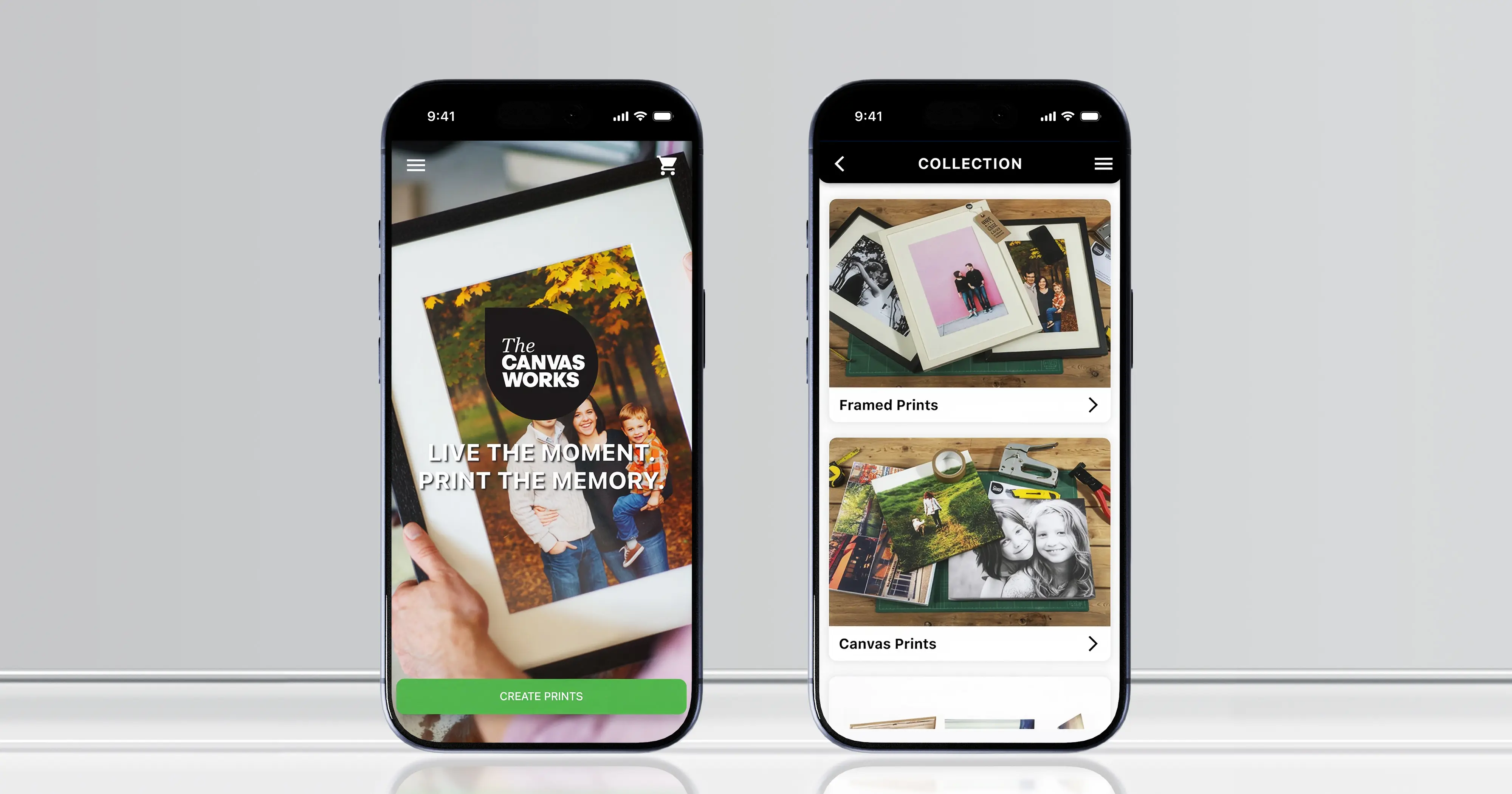
CanvasWorks mobile app
Another specialist retailer where mobile buying was the growth opportunity. See that case study.
Read the case study →